Bridging Time

Frederick photographer Margaret “Patsy” Storm Moore captured this incredible view of 150 years of transportation history. Taken from the original roadway of the Baltimore and Frederick Town Turnpike, Moore’s photograph shows three crossings over the Monocacy River.
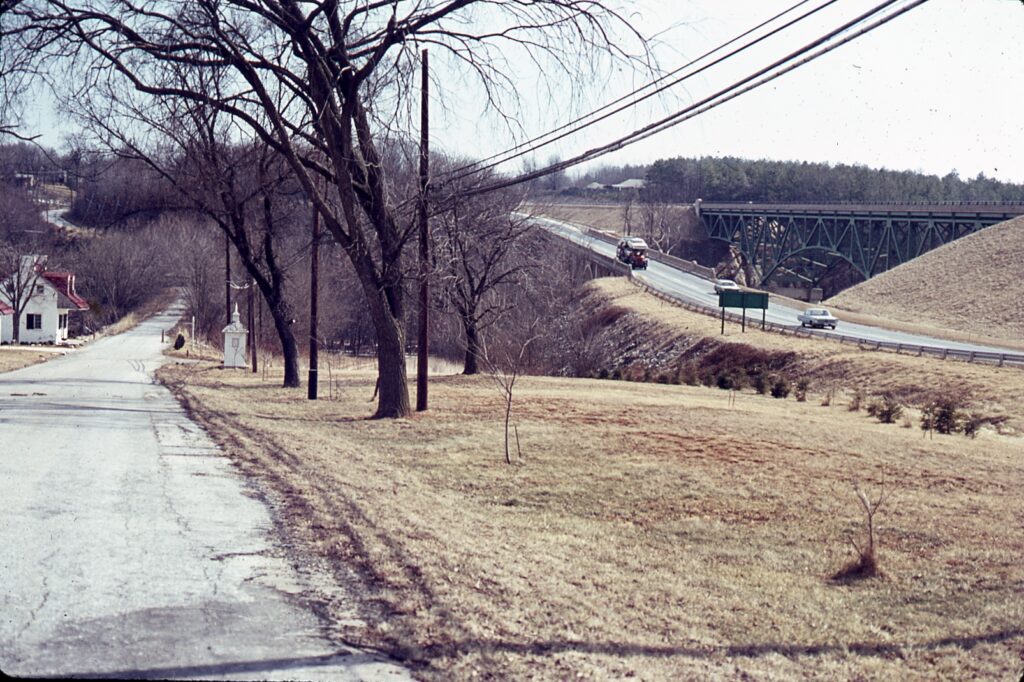
Visible at the far left is the historic tollhouse built around 1808 on the turnpike. Just beyond the tollhouse, the roadway continues toward the site of the first Monocacy River Bridge, an impressive span of four 65-foot stone arches built by Leonard Harbaugh and opened in 1808. Known as “Jug Bridge” for its unique demijohn shaped stone ornament that adorned its eastern wing wall, this structure witnessed several historic events including the welcoming reception of the Marquis de Lafayette in 1824 and the Battle of Monocacy in 1864. 

On March 3, 1942, a span of the 134-year-old Jug Bridge collapsed. The remaining arches were soon demolished and a temporary wooden roadway set atop the stone piers to carry traffic while a new concrete bridge was constructed south of the original crossing. The concrete bridge opened in 1944 and is seen near the center of the photograph.

Collapse and Demolition of the old Jug Bridge (1942) and the new Concrete Bridge (1944)

The construction of Interstate 70 initially followed the route of the old turnpike. An iron truss bridge, seen to the right in the photograph, was completed in 1956 to carry eastbound traffic next to the 1944 structure, which became the westbound crossing. After I-70 was rerouted to the north in 1985, the third bridge became the sole span carrying MD-144 over the Monocacy River. This bridge remains in use today, though the closed concrete bridge still stands next to it.

This article by Jody Brumage, Heritage Frederick Archivist and Museum Manager, was originally featured in the August 2026 edition of Frederick magazine. To see the original article, click here >>
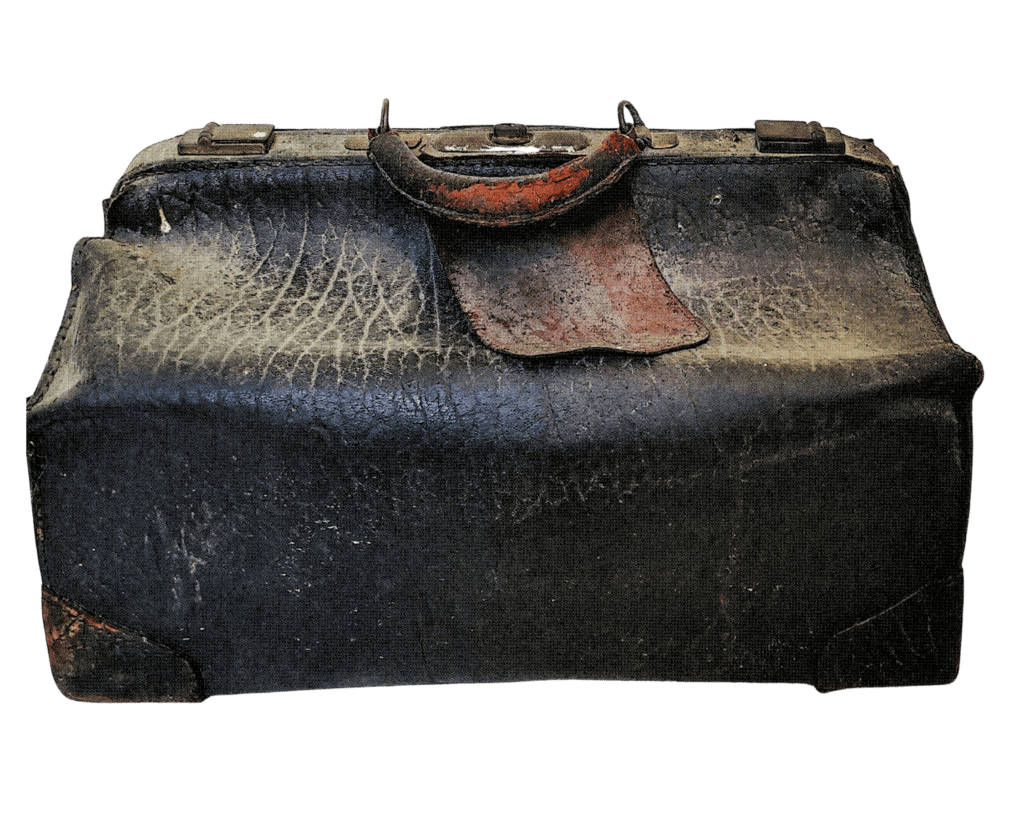
House Call

This leather doctor’s bag was recently donated to the collections of Heritage Frederick.  It traveled on horseback, by wagon and later by automobile to the scenes of accidents, the bedsides of illness and, it is estimated, 4,000 homes where a child was being born.  The bag belonged to Dr. Ira Washington Beall who practiced medicine from his home on Main Street in Libertytown for 66 years.

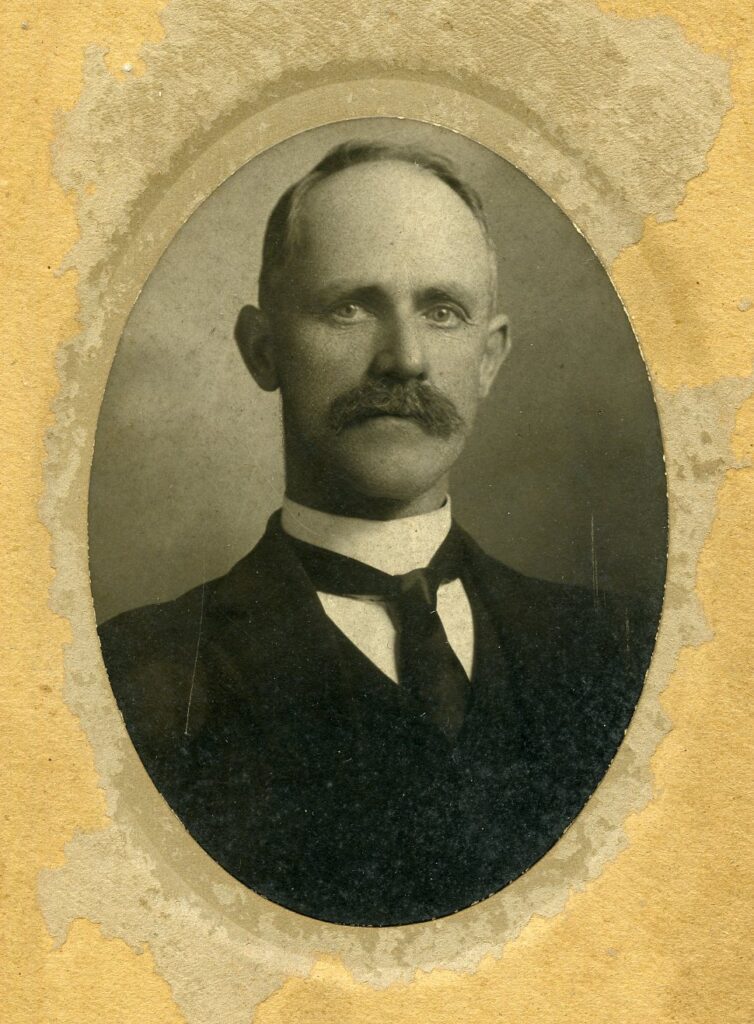
Ira Beall was born in Liberty in 1868, one of the eight children of Washington and Jane Beall.  Washington Beall, like his father before him and like three of his sons after him was a stone mason but son Ira decided on a different path.  After completing public school, Ira spent three years teaching in Burkittsville before moving to Baltimore to attend the College of Physicians and Surgeons.  Ira graduated in 1893, moved back home to Liberty and immediately set up his practice.

Dr. Ira Beall

An article in The News, Frederick tells us that just three years later he successfully reattached the finger of two year old Ada Bohn, who had been separated from it when another child struck her with a hatchet.  Through his six and a half decades of service, Dr. Beall and his wife Rosa Kate Lohr whom he married in 1898, were heralded as pillars of their community, willing to help people of all stations and situations regardless of their color, background or their ability to pay.

Dr. Beall passed away in 1959, at the age of 91, having treated his final patients just days before his death.  In addition to the leather doctor’s bag, Dr. Beall’s stethoscopes, his favorite chairs, his medical diplomas and even the shingle he hung out on the front of his Libertytown home advertising his practice were all donated by his great-niece and her daughter.

This article by Amy Hunt, Heritage Frederick Curator, was originally featured in the September 2026 edition of Frederick magazine. To see the original article, click here >>

Part of the Story

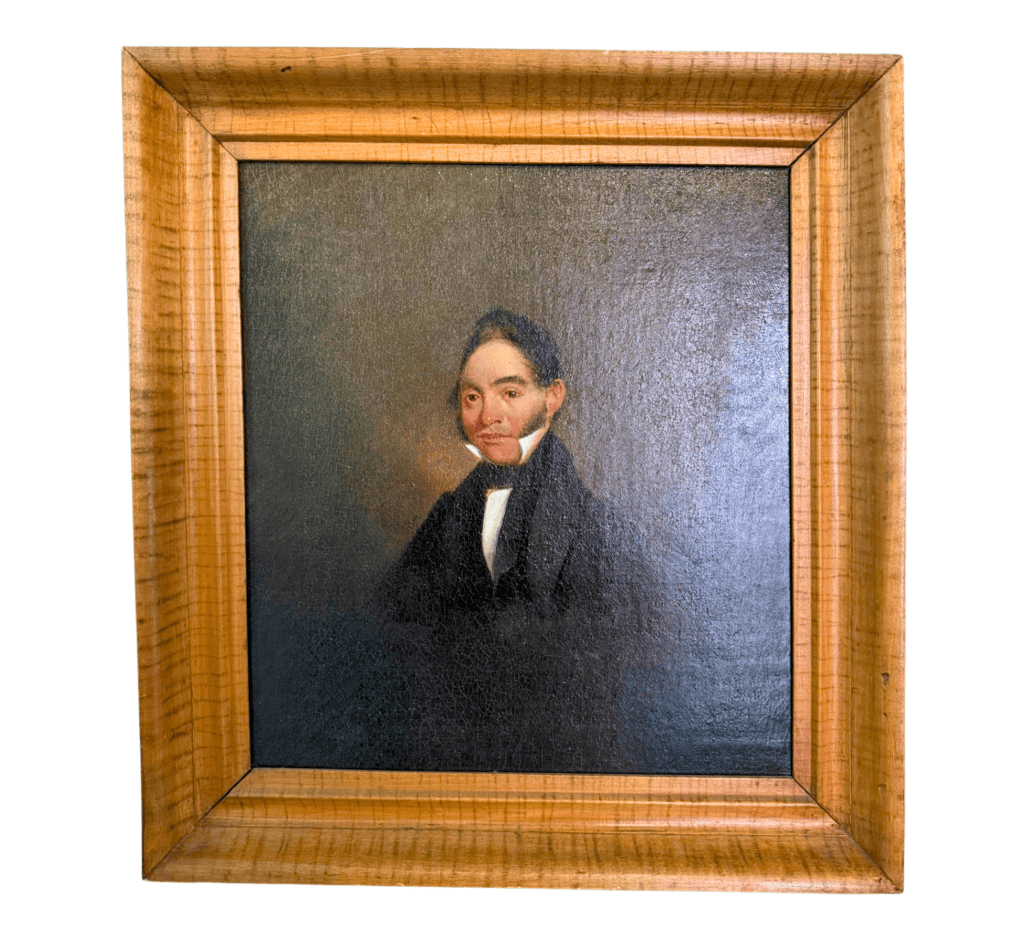
Heritage Frederick is very excited to be able to announce the arrival of a new portrait to the collection painted by an old friend. This unidentified man was painted by John Johnston Markell, one of Frederick’s earliest artists of note. 

Born in 1821, Markell, the third of five children born to Samuel and Amelia Schley Markell, was reportedly already an accomplished watercolorist by the age of 8. At 17, he could be found in Philadelphia, a student of renowned artist, Thomas Sully.  His course work with Sully was left unfinished when he returned to Frederick due to his older brother William being very ill and dying suddenly at just 23 years old in April of 1839.  

Markell then traveled the region as an itinerant painter, advertising in June of that year in Leesburg, Virginia that he welcomed those interested in having their portraits made to come to his lodgings and review his work.  Markell had plans to travel to Italy to continue his studies but his life was also tragically cut short.  Like his older brother, Markell died at 23 years of age on December 2, 1844.  

Surviving today, 181 years later in the collection of Heritage Frederick are many works by John Markell, including early watercolors, portraits and a stunning landscape of Frederick as viewed from Prospect Hill in July 1844.  Two of John Markell’s self portraits also reside in the collection, one he completed when he was 17 years old and the other when he was 22 painted just 10 months before his death.

The new gift, Portrait of an Unidentified Man, was given in September by Charles Markell, III.

This article by Amy Hunt, Heritage Frederick Curator, was originally featured in the November 2025 edition of Frederick magazine. To see the original article, click here >>

Oldfields: Frederick County’s Last Surviving Rosenwald School

Over 5,000 schools for African American students were built between 1917 and 1931 across the southern United States through the collaboration of educator and author Booker T. Washington and Julius Rosenwald, President of Sears, Roebuck, and Company. The Rosenwald Foundation provided matching grants to over 150 school projects in Maryland, including the Oldfields School.

Oldfields is a historically Black community located at the intersection of New Windsor and Coppermine Roads, near Libertytown. Several families in Oldfields joined together to purchase land in 1871 “for the purpose of erecting a house thereon to be used for a school house and to worship in.” In 1883, Keys Chapel was dedicated on this site. 

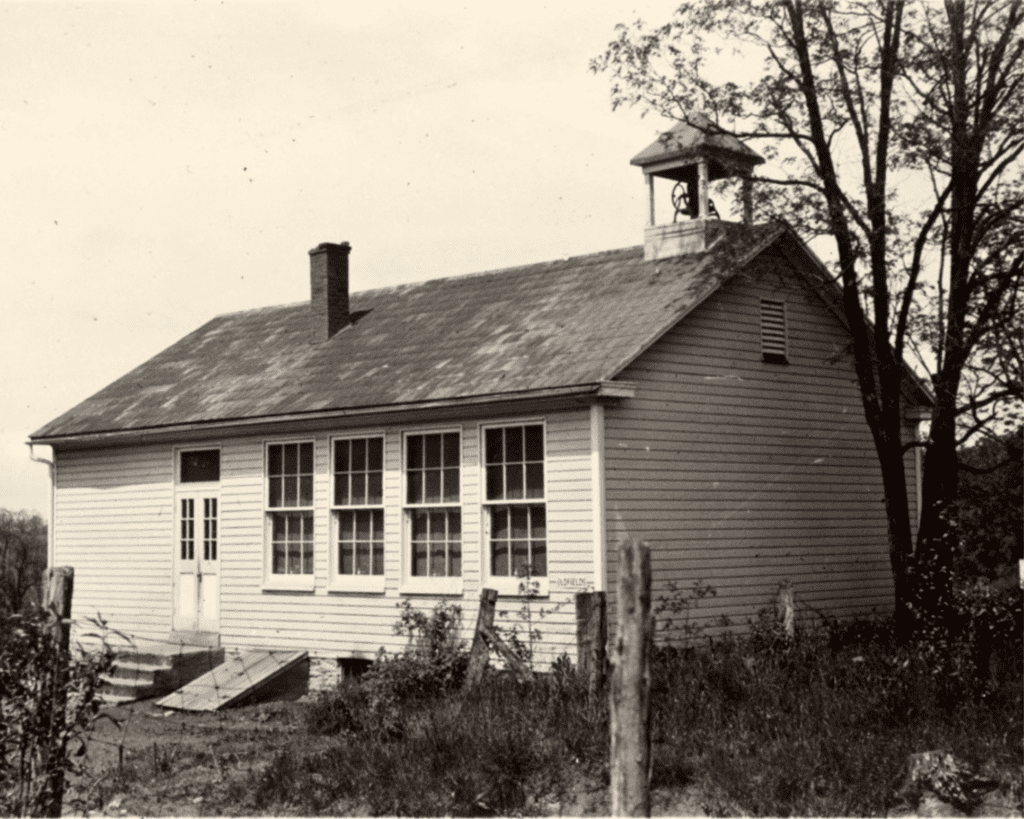
Families in Oldfields raised funds and secured a grant from the Rosenwald Foundation in 1918 to build a larger dedicated school building. As seen in this photograph, the new school contained a classroom and two cloakrooms and was built using plans prepared at the Tuskegee Institute. 

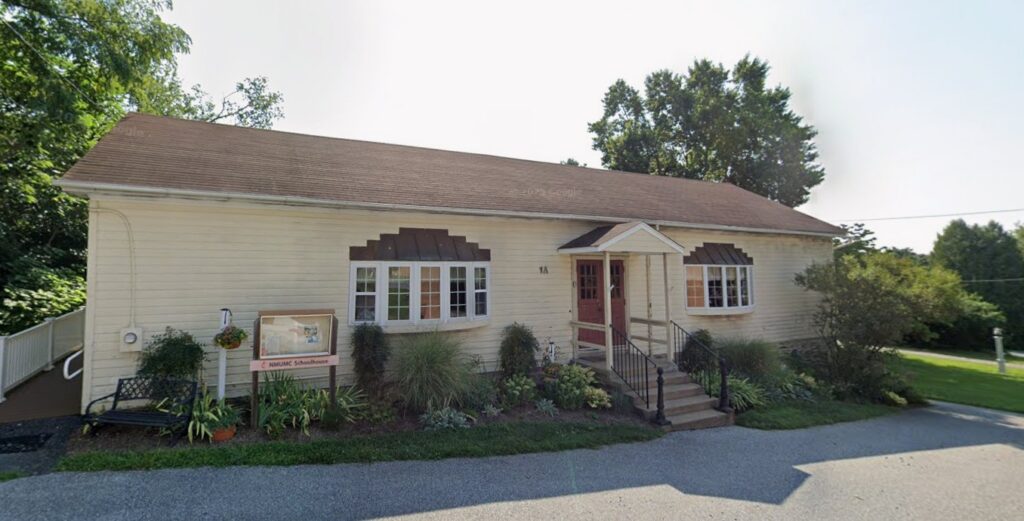
The population of Oldfields declined during the Great Depression and the school closed in 1935. Four years later, County Superintendent Eugene W. Pruitt proposed using the Oldfields building to replace the century-old segregated school in New Market. During the fall of 1939, contractor William Cookerly moved the structure over ten miles from Oldfields to New Market and constructed an extension to accommodate a second classroom.

After the integration of New Market Elementary School in 1961, the former segregated schoolhouse was acquired by New Market United Methodist Church. Today, the structure is the only surviving Rosenwald School in Frederick County.

This article by Jody Brumage, Heritage Frederick Archivist and Museum Manager, was originally featured in the August 2026 edition of Frederick magazine. To see the original article, click here >>
Patriotic Display

Freedom in America began with a Revolution –brave people, willing to put themselves in danger to stand up for the rights of their neighbors and friends – a melting pot of immigrant families from many parts of the World, looking for a better life, hopeful but not yet sure what “being American” would mean.

Peter Mantz was 23 years old in July 1776.  Raised in Frederick, he was one of nine children of German immigrant parents Johann Casper and Anna Christina Heim Mantz who ran a general store on East Patrick Street.

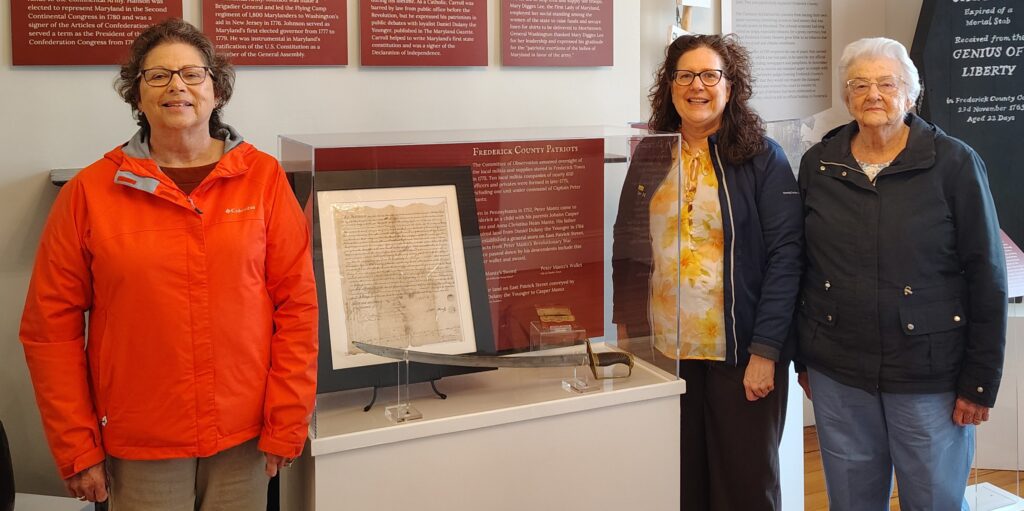
Major Peter Mantz’s Revolutionary War Sword.
Gift of Elizabeth Robinette Kemp Roszel.

Following the adoption of the Declaration of Independence, two hundred and fifty years ago this month, Maryland patriots at the request of the Continental Congress began organizing the Flying Camp, an active-duty militia of 10,000 men from PA, MD and DE that would be constantly on the move to give support to the Continental Army, wherever needed.  Peter Mantz was selected to lead one of ten local companies. Mantz, with just over 80 men, supported the movements of General George Washington and the Continental Army in defense of New York City as well as their retreat through New Jersey and back across the Delaware River.

Following his Revolutionary service, Mantz went on to be a militia recruiter, a land surveyor and speculator, a tax commissioner, a Maryland legislator and the County Sheriff.  He married and raised 11 children of his own in Frederick. On view as part of Heritage Frederick’s Cultivating Independence: Frederick County in the Revolution exhibition are the Revolutionary war sword of Peter Mantz and a leather wallet that belonged to him later in life. Earlier this year, sisters and Peter Mantz descendants Joan and Bonnie, along with their mother Helen, stopped in to view their own Frederick County History after being identified and contacted by staff.

This article by Amy Hunt, Heritage Frederick Curator, was originally featured in the July 2026 edition of Frederick magazine. To see the original article, click here >>