
Rear Admiral Daniel Ammons is credited with bringing the first goldfish to the United States from Japan in 1878; he delivered the fish to the federal Fish Commission in Washington, DC. Goldfish are a species of carp generally agreed to have originated in China in 900 AD. Centuries ago, gold and items colored gold were symbols of value, and scientists and farmers began breeding generations of goldfish to intensify the gold characteristics.
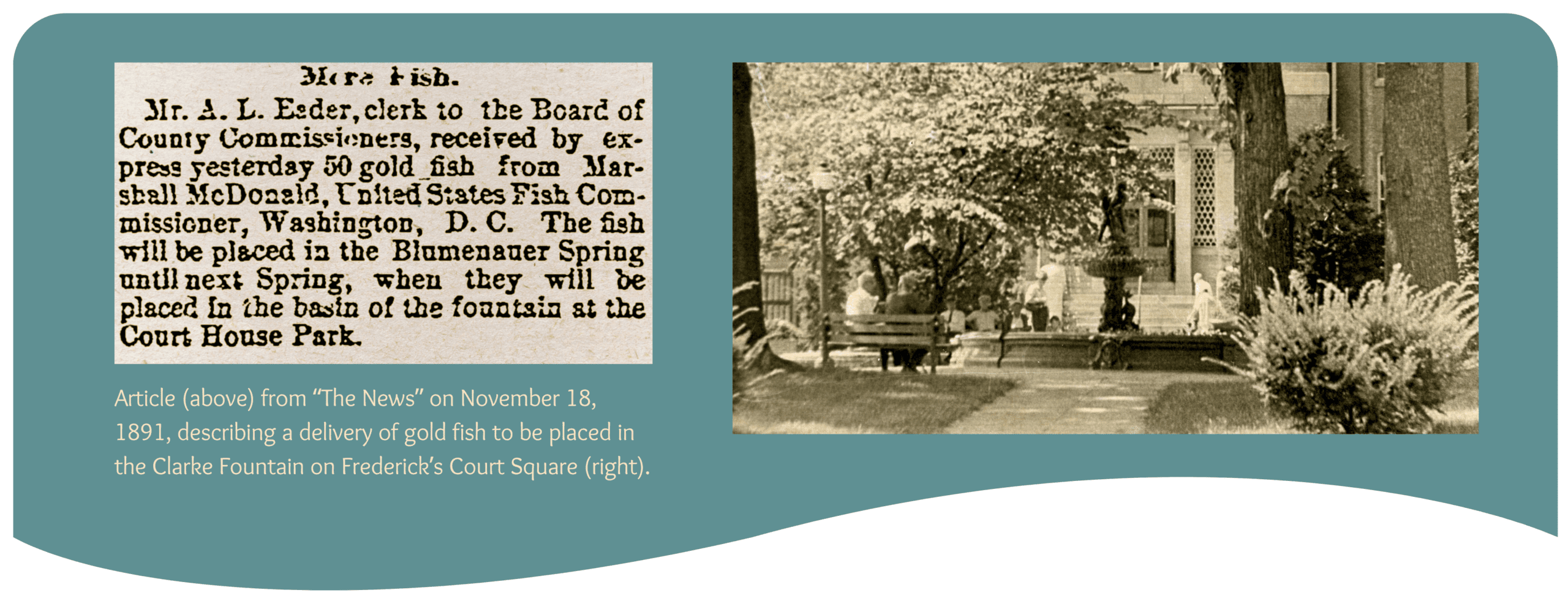
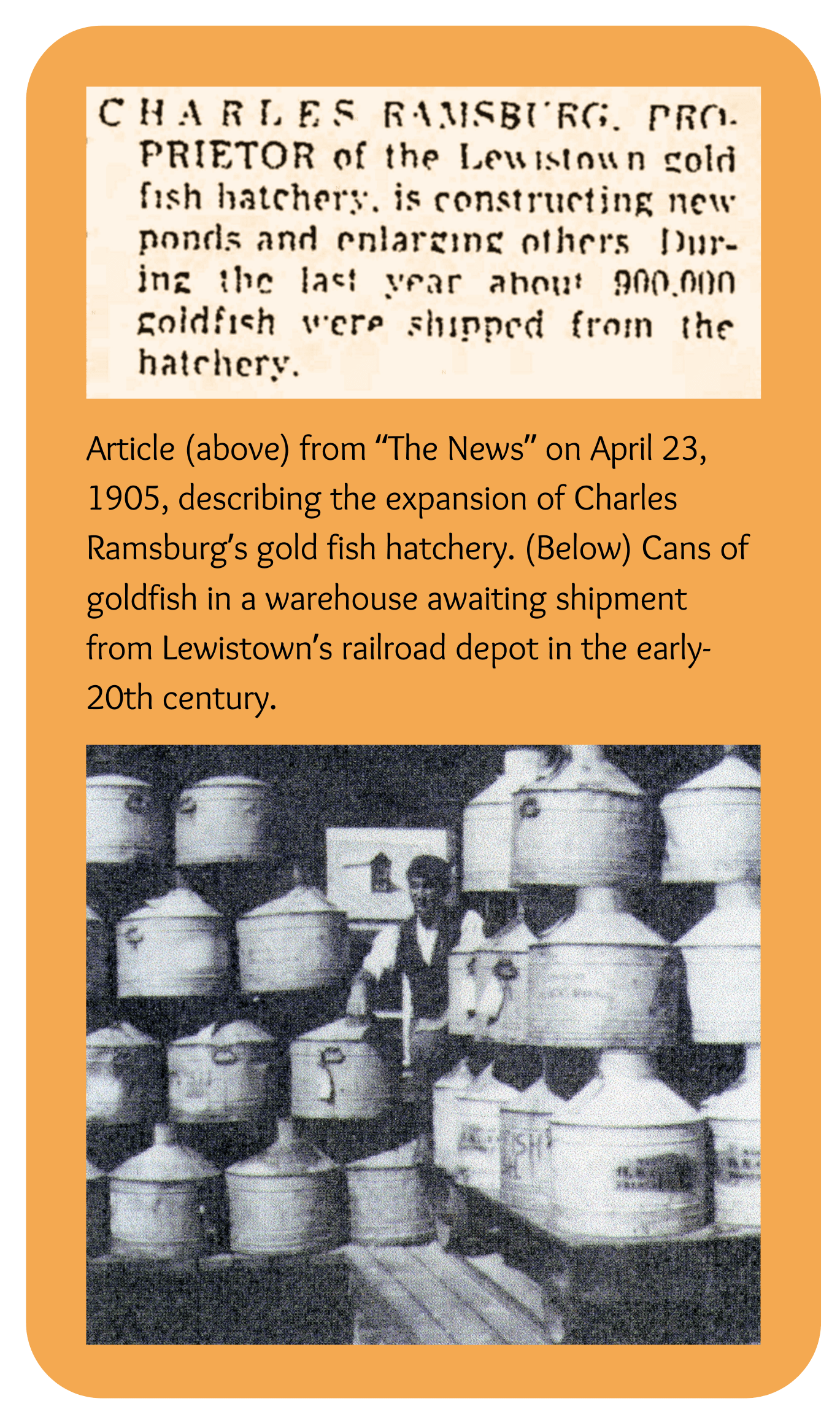
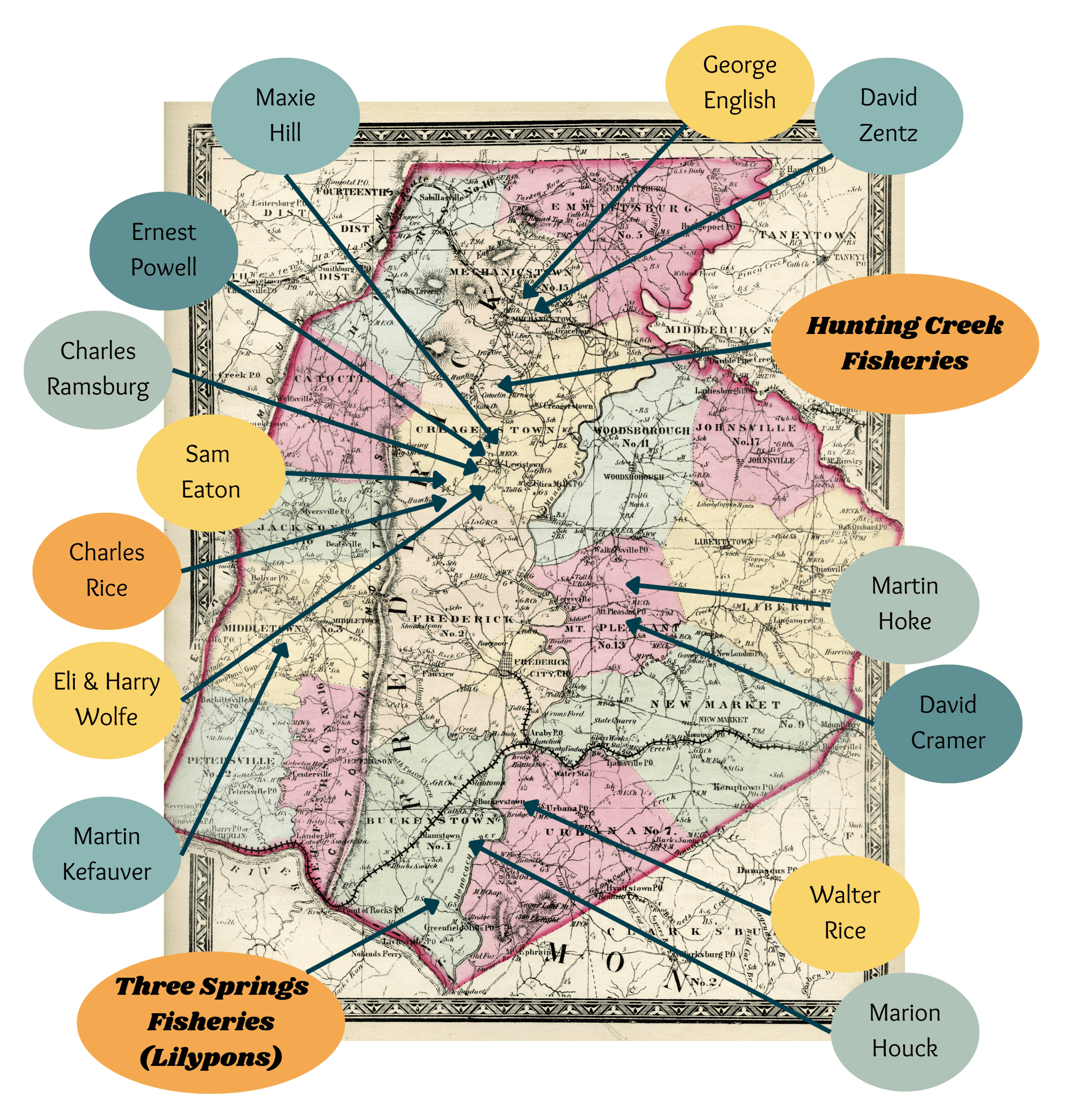
The Fish Commission began gifting batches of goldfish to communities as well as individual farmers, who began propagating goldfish as a supplemental crop to whatever other crops or livestock they were farming. Ponds were common on farms as a source of water and for firefighting; farmers whose land included continuous access to fresh water led efforts to “grow” goldfish. In 1886 Charles Ramsburg dug what is believed to be the first pond for purposeful propagation of fish, in Lewistown – he started with edible carp and switched to goldfish in 1889. Two other prominent pioneers in Frederick County’s goldfish industry included Ernest Powell, also in Lewistown, and Martin Kefauver, in Middletown. As a local industry, 1905 – 1930 represented a golden age. Various news items from the era credit Frederick County farmers with supplying between 66% and 80% of the entire nation’s supply of goldfish at the time. But, due to rising costs, increased foreign competition, the Great Depression, and falling profits, goldfish farming became less and less of a supplement and most fish farms in Frederick County transitioned back to traditional crops or livestock in the 1930s and 1940s.
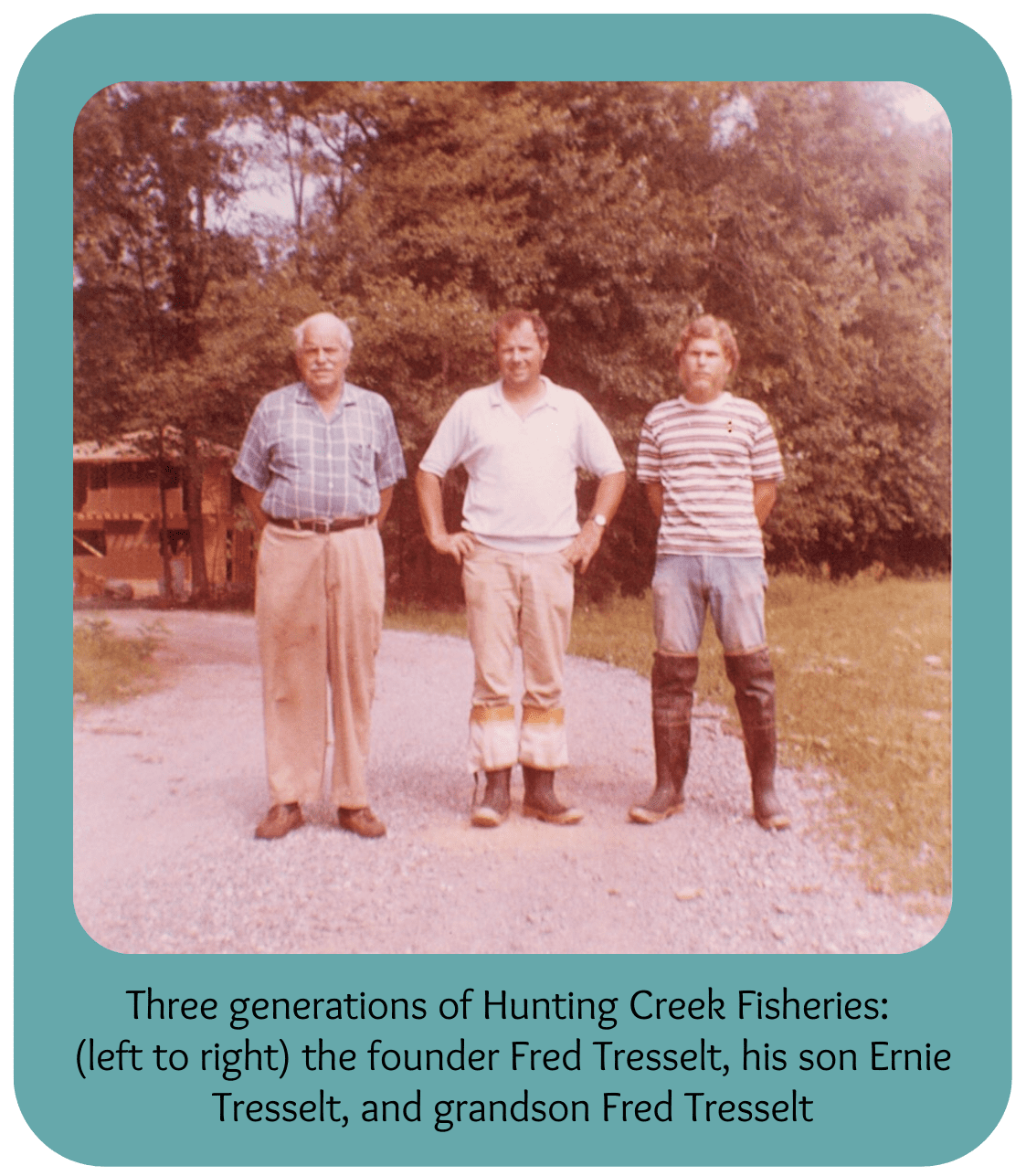
The second generation of goldfish farmers were led by Fred Tresselt, at Hunting Creek Fisheries in Thurmont, and G Leicester Thomas, at Three Springs Fisheries in Adamstown. Beginning in the 1920s and through the 1960s, these two farms accounted for millions of goldfish annually between them. Tresselt discovered a fish hatchery on his college campus at Cornell University and focused his studies on fish and fisheries; after graduating he worked for four years at a state hatchery in New Jersey. In 1922, Tresselt visited Sabillasville, MD to see a college friend and became intrigued by the fish farms he saw dotting the landscape. With $3,000 borrowed from his mother, Tresselt bought some farm fields and paid local laborers to dig his first ponds; Hunting Creek Fisheries emerged in 1923.
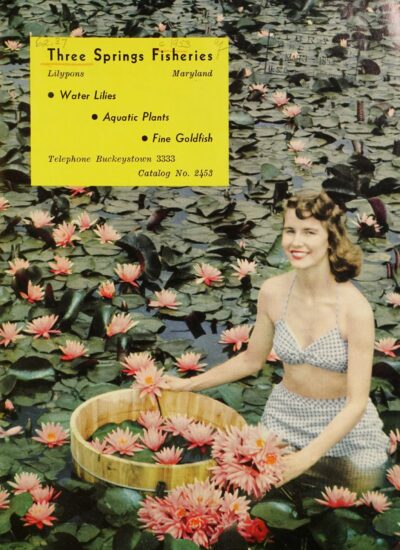
Thomas worked as a teacher for a time and then in administrative roles at Frederick businesses; he bought a substantial farm for personal use, and as a hobby in 1917 began growing water lilies in ponds that he also stocked with goldfish. Passersby would come to see the lilies and often leave with a goldfish as a gift. Eventually, demand for the fish spurred Thomas to register his business in 1929. Thomas shipped so much freight that the United States Post Office opened a branch on his farm; the mailing address was named Lilypons, MD [after the opera star, Lily Pons, and an homage to the lilies], and the business later changed its name to Lilypons, too, in the 1970s.
Both businesses stayed in the respective families and sons who grew up on the farms- and who brought improved strategies and methods- enhanced growing, feeding, protecting, and shipping practices, which improved profitability. But, by the 1970s Lilypons had shifted to feature its lilies and minimize the goldfish; the business finally closed in March 2024. On the other hand, beginning in 1962, Fred’s son, Ernie, led Hunting Creek through three decades of consistent growth and profitability. In 1980, he shipped 12 million fish, including koi and other species. The business remains in operation, led by Ernie’s grandson, certainly diminished from its hey day but still looking for innovations and fighting for customers.
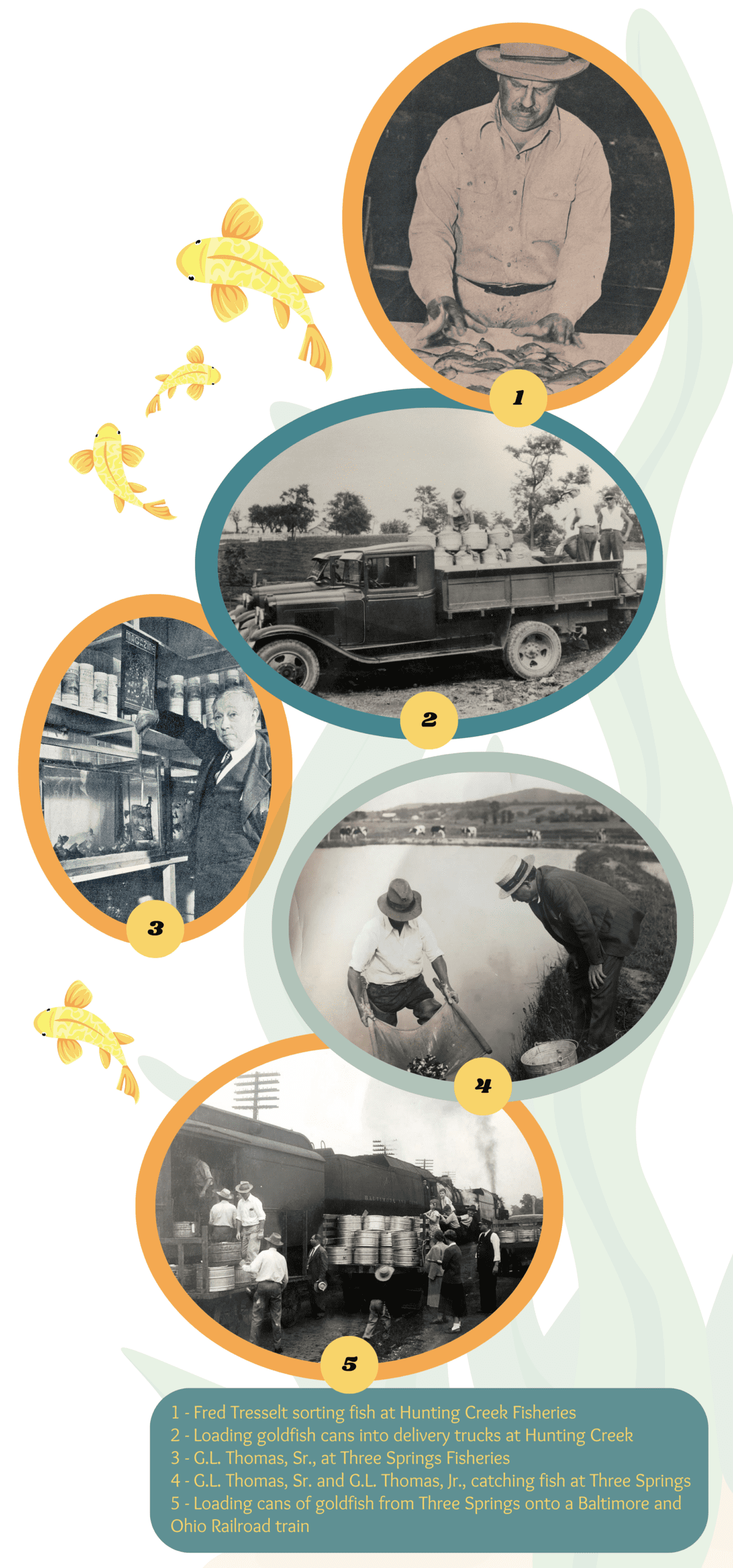
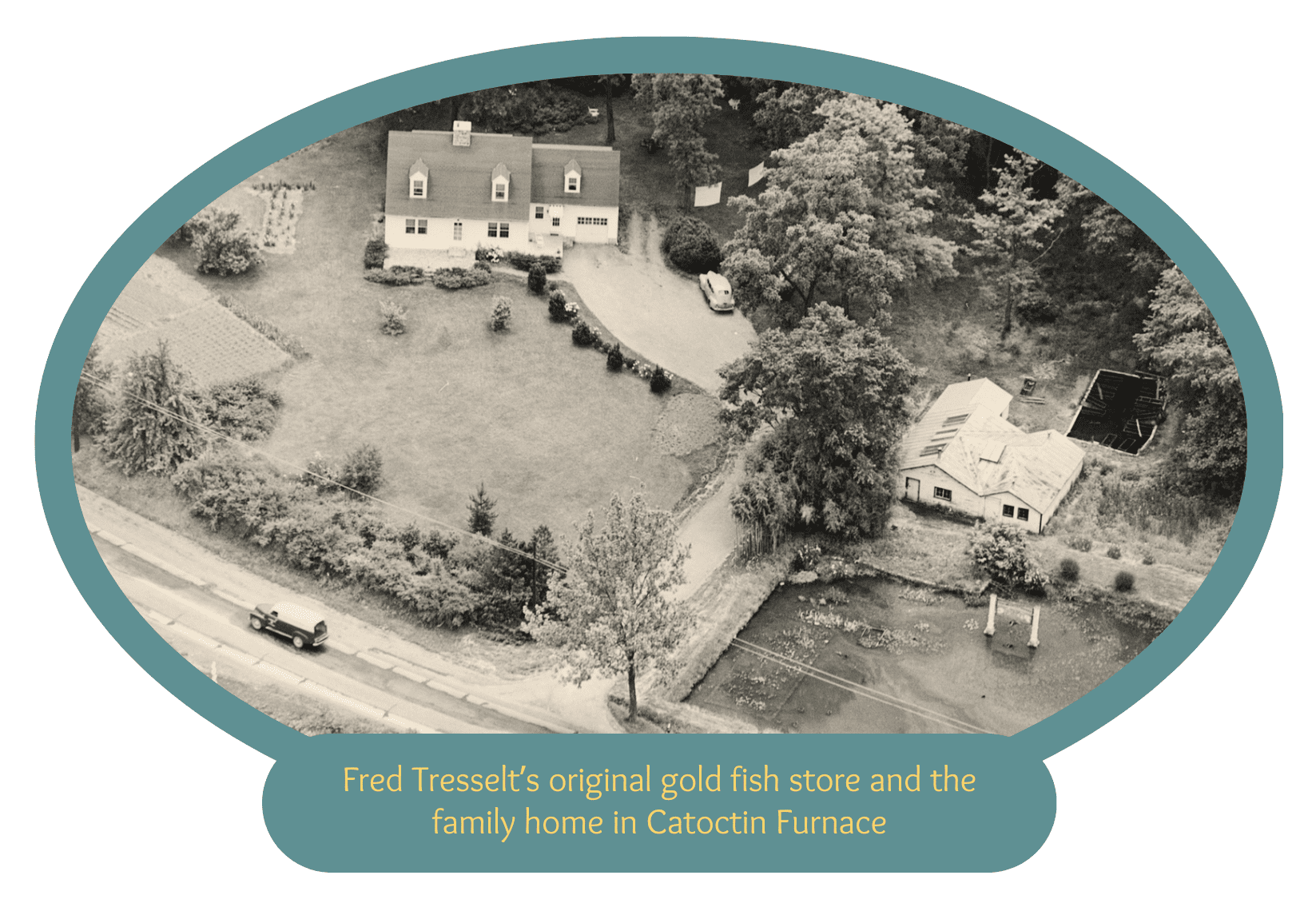
Hunting Creek Fisheries, which began operations in 1923, is in Frederick County, near the village encompassing the Catoctin Furnace. Its founder, Fred Tresselt, grew up in New York City and attended Cornell University, where he intended to study agriculture. On campus, Fred discovered a small fish hatchery and began specializing his study around fisheries. After graduation, he took a job as a biologist at the New Jersey State Fish Hatchery and stayed four years. In 1922 Fred came to Frederick County to visit a college friend. While touring the area, he became intrigued by the many goldfish farms in the County. He bought a couple cornfields using $3,000 borrowed from his mother, and got a bank loan to help pay local men to dig his ponds. Unlike most other goldfish farmers in the County, fish were Fred’s only crop, and for the next 25 years he enjoyed enough success to keep the business functioning and raise his family. Hunting Creek lore includes an anecdote from 1942 that President Roosevelt, Prime Minister Churchill, and General Marshall stopped at the fishery’s roadside store while driving north to Shangri La (later named Camp David).
Ernie Tresselt, Fred’s son and later partner then successor, was born in 1927. He spent a lot of time as a youth roaming the Hunting Creek property. As Ernie got older and through high school, his time at the fishery was less playing and more working and learning. He joined the military as World War II was ending and spent two years as a radio operator. Then Ernie earned undergraduate and graduate degrees from the College of William & Mary, focusing his studies on aquatic biology. He returned to Frederick County to work with his dad at the farm in 1950.
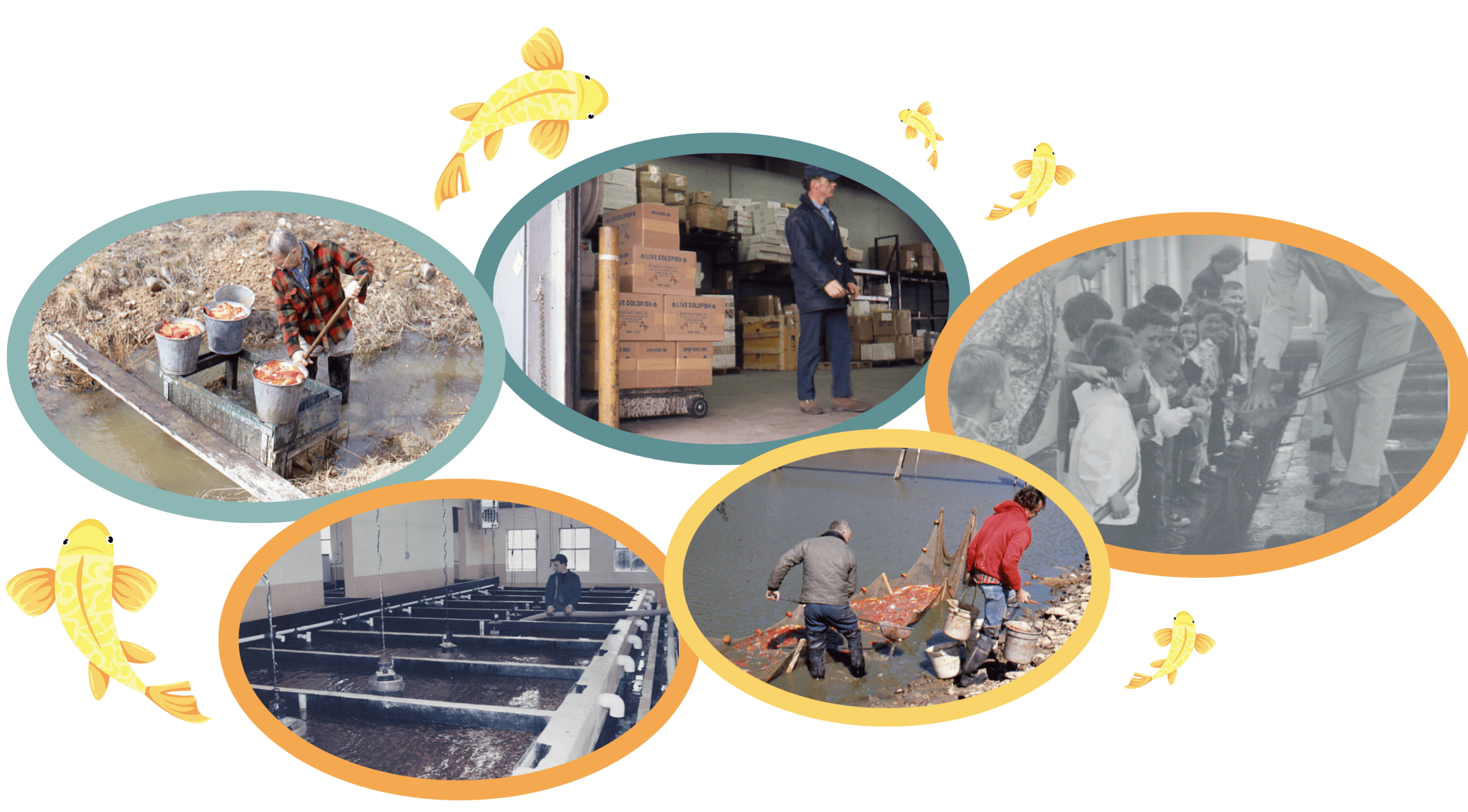
When Ernie joined the business, his father’s methods had stayed relatively consistent from when the business started. Ernie introduced concepts to improve the productivity and profitability of the enterprise. He focused on nutrition for the fish and protecting fish from predators – birds certainly but also water-borne pests like dragonfly larvae and fairy shrimp. Ernie used a chemical that killed the larvae but had no effect on the fish, and the quantity of fish stock spiked. Ernie improved the food product and feeding method as well, which meant better food and less loss of food. In 1962, Ernie and his wife became co-owners along with his parents, and Ernie took over leadership of the operation.
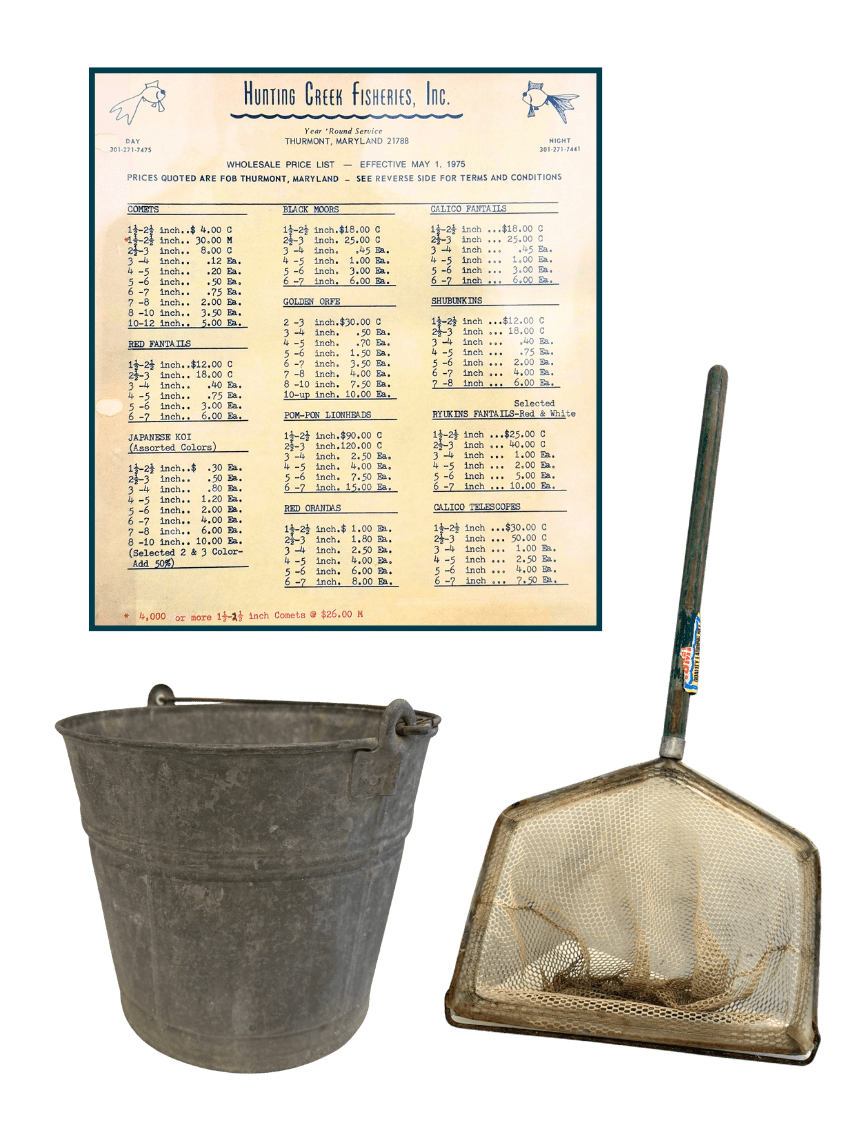
In the 1970s, in addition to goldfish, Hunting Creek offered koi, which had become a very popular pet fish in backyard ponds. During the same decade, the business expanded to 85 acres at the main site plus 14 acres nearby and 25 more acres in Lewistown. At its peak, the company had 100 outdoor ponds and 40 300-gallon indoor tanks for sorting and processing. In 1980, it shipped 12 million fish. Ernie’s son, Fred, served as president of Hunting Creek for a time, followed by his sister, Dru, in the 1990s. Ernie retired from Hunting Creek in 1992. Since that time, profitability has been a constant challenge, because of the scale of foreign and domestic competition, rising operating costs not matched by increasing fish prices, slowed demand, and the lack of a way to expand, principally because of high real estate costs. Dru’s son, Matt, is the fourth generation owner. The business has diminished from its heyday, but it remains in operation.