
In 1745, Daniel Dulany surveyed land in a wilderness that became Frederick Towne. Part of that survey was a street later named All Saints. Over the next 275 years, All Saints Street became an avenue to the history of Frederick. No single person or event captures the story of All Saints Street. The complexity of this story is reflected by the diversity of its people, their churches, and their work.
Early Settlement
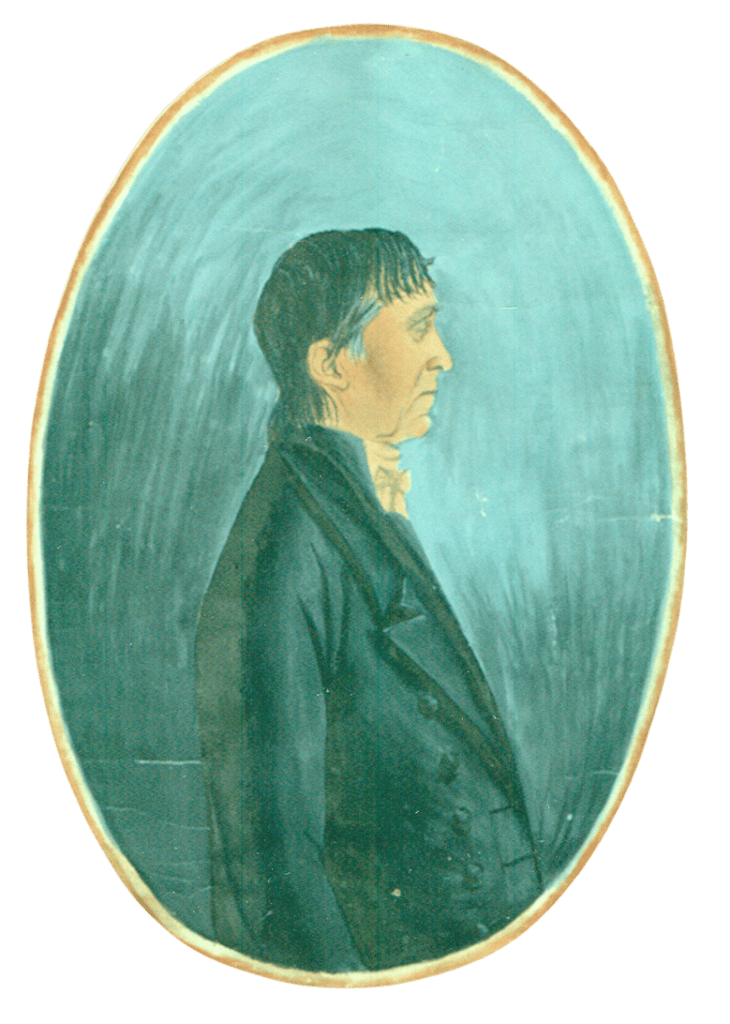
In 1748, Dulany sold his first land lots to John Thomas Schley, an emigrant from the Palatinate region of Germany. Schley purchased lot 16 on All Saints and built a tavern and home on West Patrick Street. Schley served as a teacher and choirmaster at the German Reformed Church.
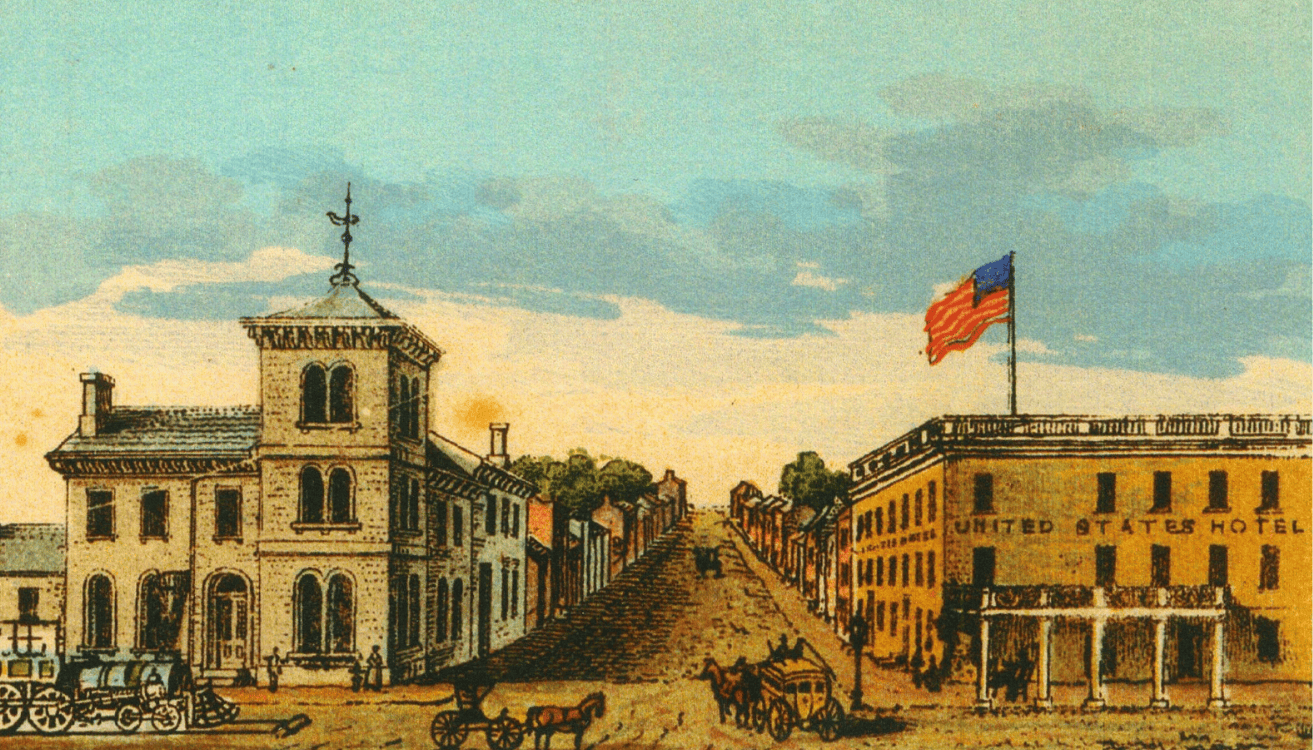
Early settlers on All Saints Street were self-employed craftsmen who lived and worked in their homes. Christian Steiner who purchased lot 1 was a blacksmith. Jacob Gardenhover at lot 13 was a joiner. William Kinball who purchased lot 24 was a “saddler.” At lot 153, Thomas Price worked as a “hatter.” A cooper’s (barrel maker’s) shop was located at lot 12. Frederick was on a well-recognized route for immigrants traveling from eastern port cities to western lands, so there were inns to accommodate travelers. Innkeeper Arthur Charlton owned lots 159-161, which became the location for the U.S. Hotel in the 19th century.

French and Indian War
Regional, national and international conflicts affected lives on All Saints Street. So too, individual actions and events on All Saints directly impacted these wars.
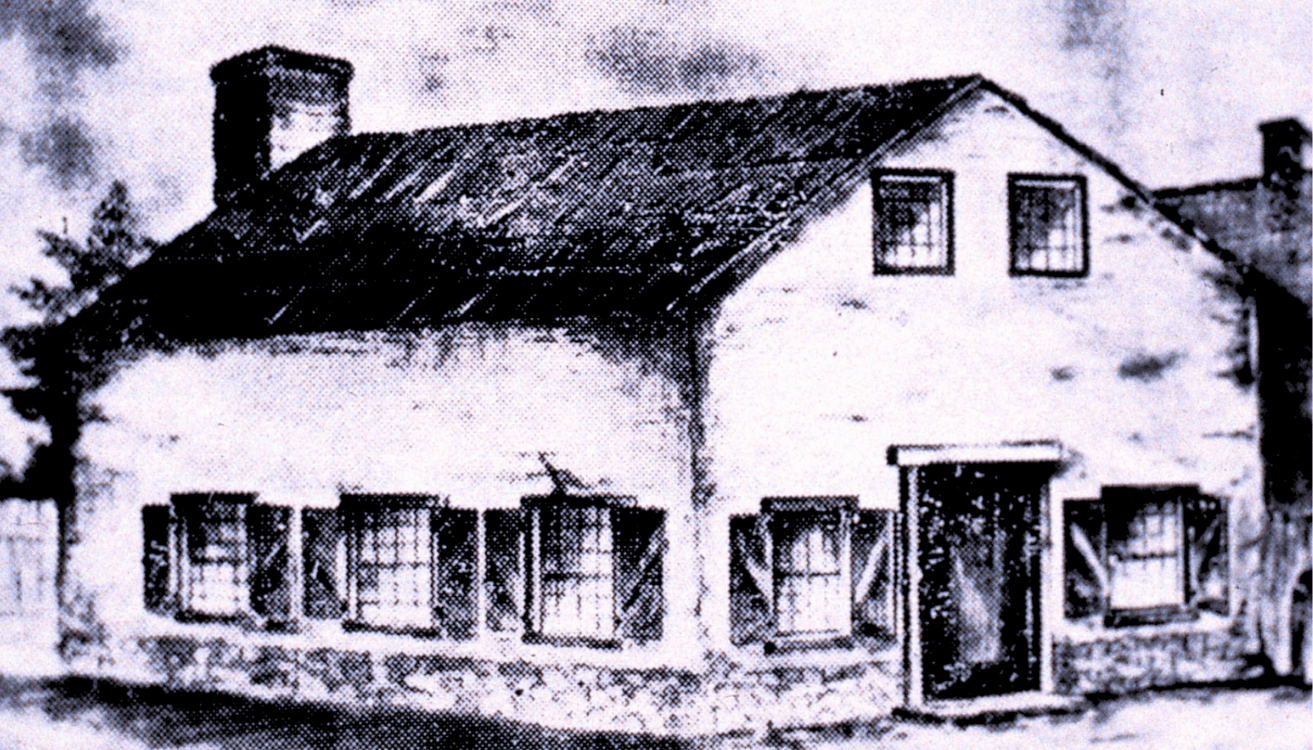
In 1755, British General Edward Braddock and Virginia militia commander George Washington met in a small tavern off West All Saints Street on the banks of Carroll Creek. They planned the assault on Fort Duquesne near Pittsburgh. The combined British and colonial force of 1400 men was ambushed just short of the fort. Braddock was killed along with 900 men. Their retreat ended in Frederick where their march began. This marked the beginning of a long and bloody war for control of lands east of the Mississippi River.
Churches on All Saints Street
Churches played a significant role in Frederick since its founding. Like the clothes they wore, the earliest settlers brought their religion with them. Their churches were not only places to worship but community centers and often schools.
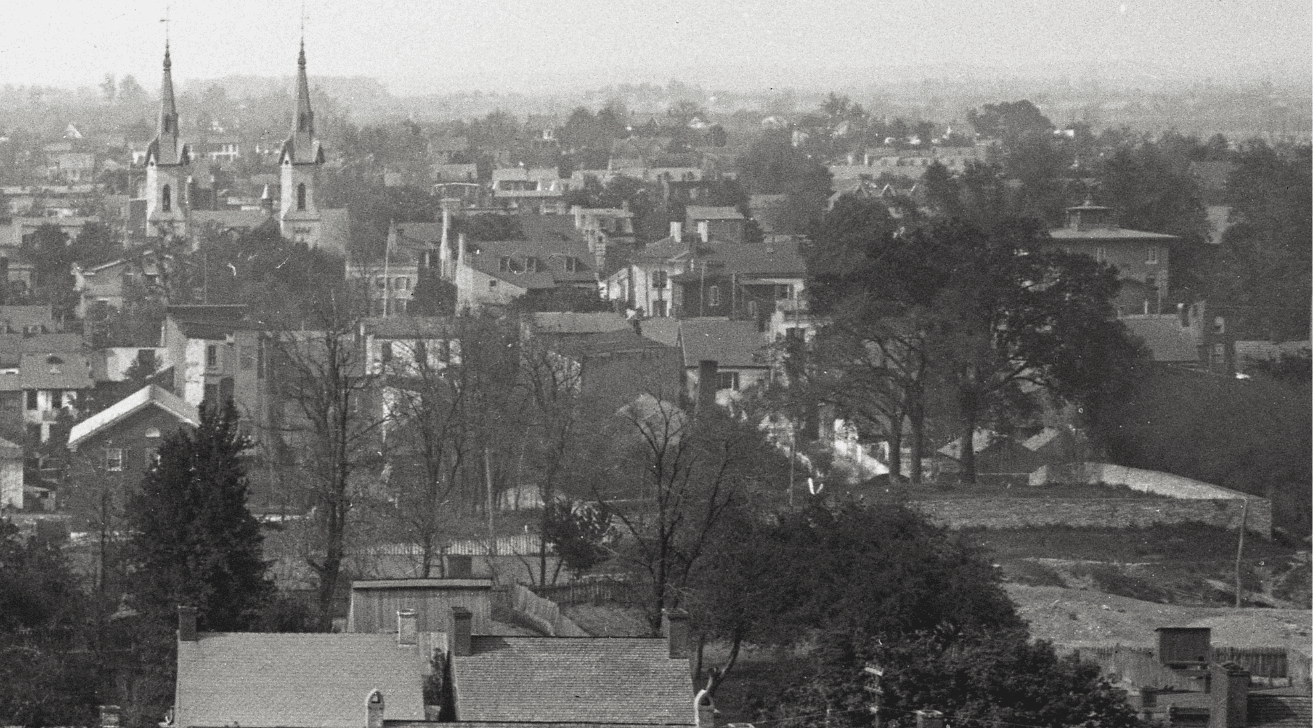
All Saints Parish was created in 1742 by an Act of the Maryland Legislature. The church acquired lots 7, 8, and 9 from Daniel Dulany. By 1748, a brick sanctuary was partially finished, and a graveyard was added. The church remained on All Saints Street until 1814, when it moved to a new building on Court Street. Even though the church was gone, the street continued to be called “All Saints.”
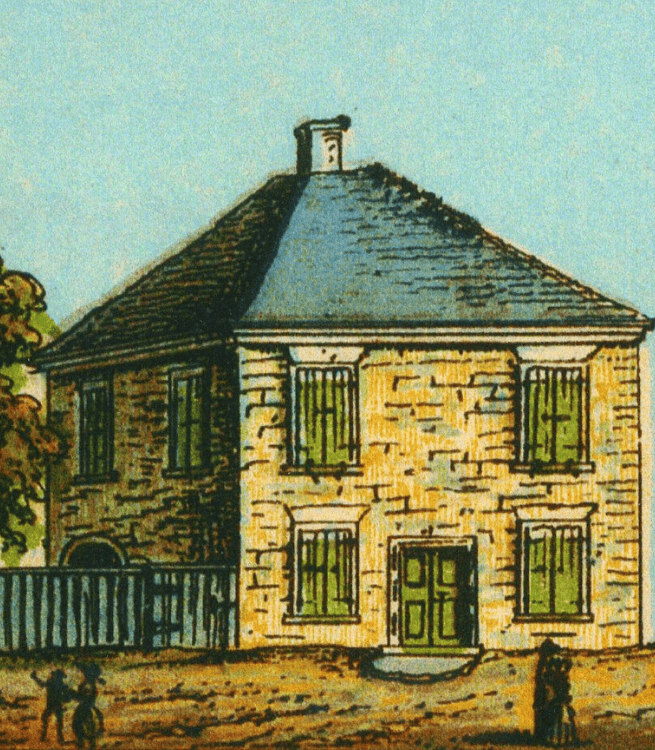
In 1773, the First Baptist Church was established on West All Saints Street. Jacob Engelbrecht recorded in his diary that “I know but four Baptists in this town” and they have “a very little church” (October 20, 1823). Despite the small congregation, a church made of locally quarried limestone with a four-square roof was erected and still stands. In 1863, the church was given to the “colored” people in the community and became known as the First Missionary Baptist Church.
Revolutionary War
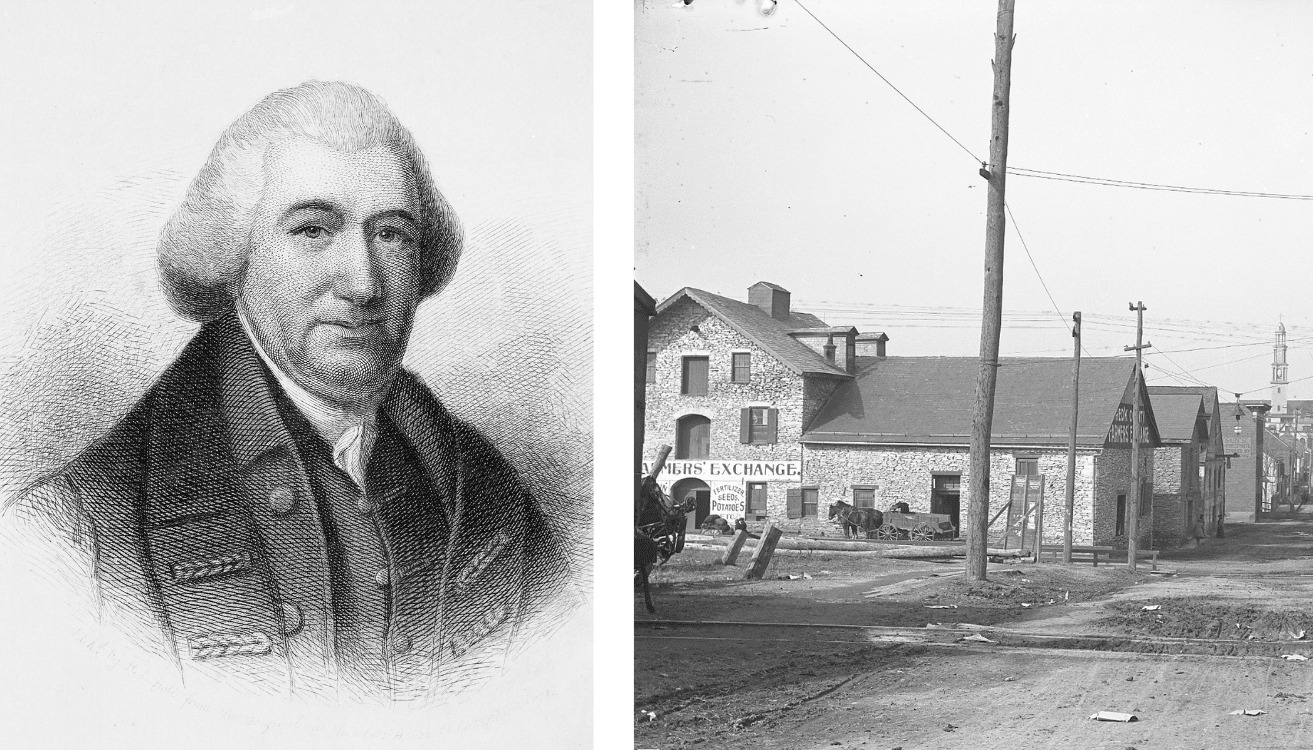
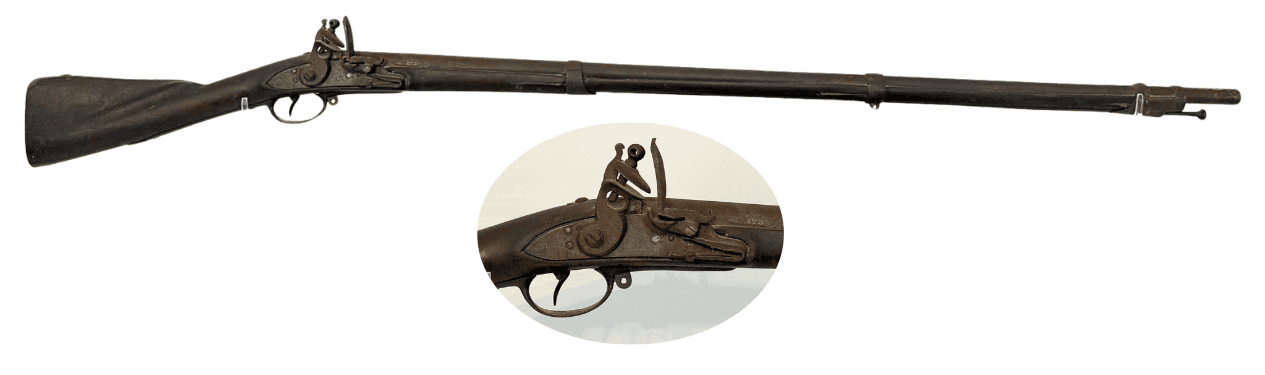
After the battles of Lexington and Concord in 1775, Maryland and Frederick quickly responded with men and arms. Maryland was the first colony to send a militia to Massachusetts to join the Continental Army. The Annapolis Convention, which was organizing Maryland’s war effort, appointed John Hanson to raise arms for the local militias. He purchased a stone building on lot 1 on East All Saints Street to manufacture gun parts for muskets.
Early Free Black Community
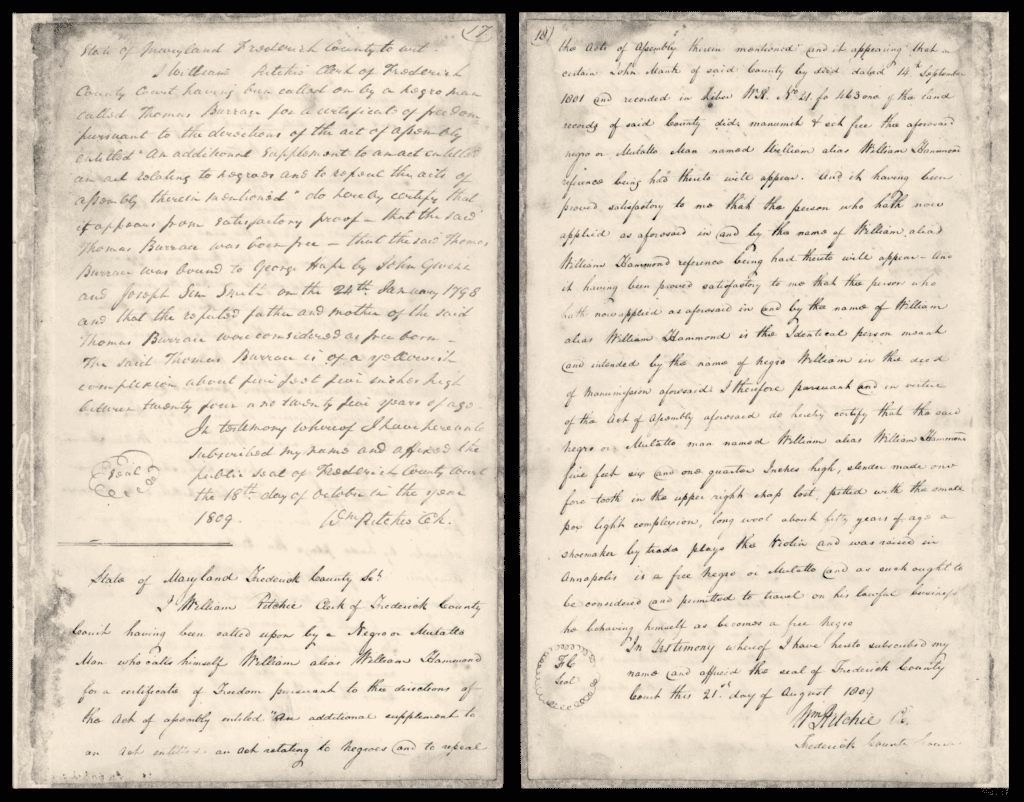
In 1811, former enslaved man William Hammond purchased lot 10 on All Saints Street. What little is known about Hammond comes from legal documents and Jacob Engelbrecht’s diary. Hammond paid his owner 137 pounds to be manumitted (freed) in 1801. Tax records state that Hammond lived in a “small frame house.” In 1818, Hammond sold part of lot 10 for construction of Old Hill Church. In 1827, Engelbrecht recorded that Hammond’s granddaughter, Catherine, was married by the minister of All Saints Church. When Hammond died in 1832, Engelbrecht wrote that “he was quite a respectable man” (May 14, 1832).
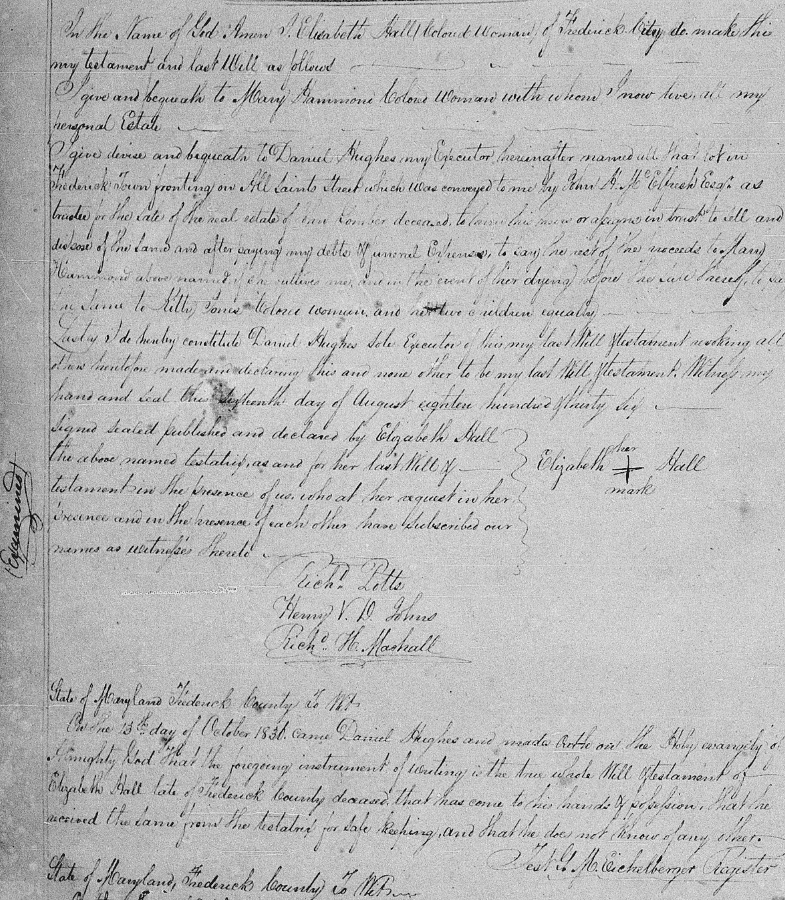
In 1819, Hammond manumitted Elizabeth Hall, whom he purchased as a slave to free her. The document states Hall was 43 years old and “able to work and gain a sufficient livelihood.” In 1832, Hall purchased a lot on All Saints Street adjacent to Hammond’s lot for $175. In 1836, before her death, Hall hired a lawyer to draft a will, signing with an “x”, indicating that she could not read or write but had sufficient property to prepare a will.

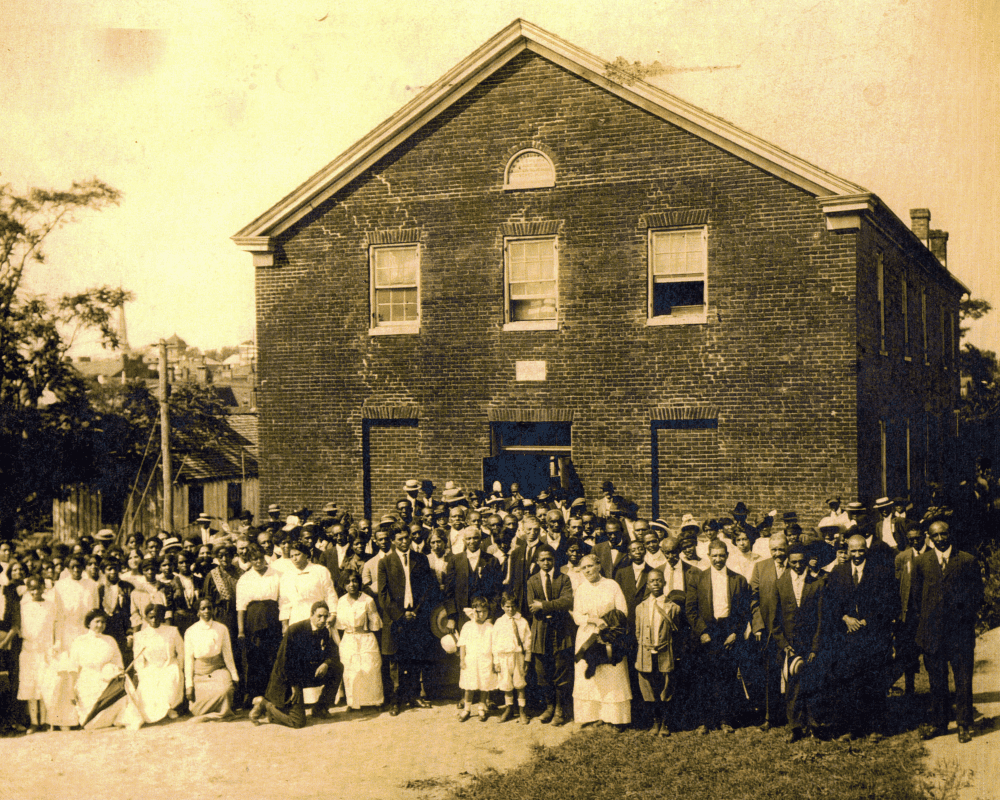
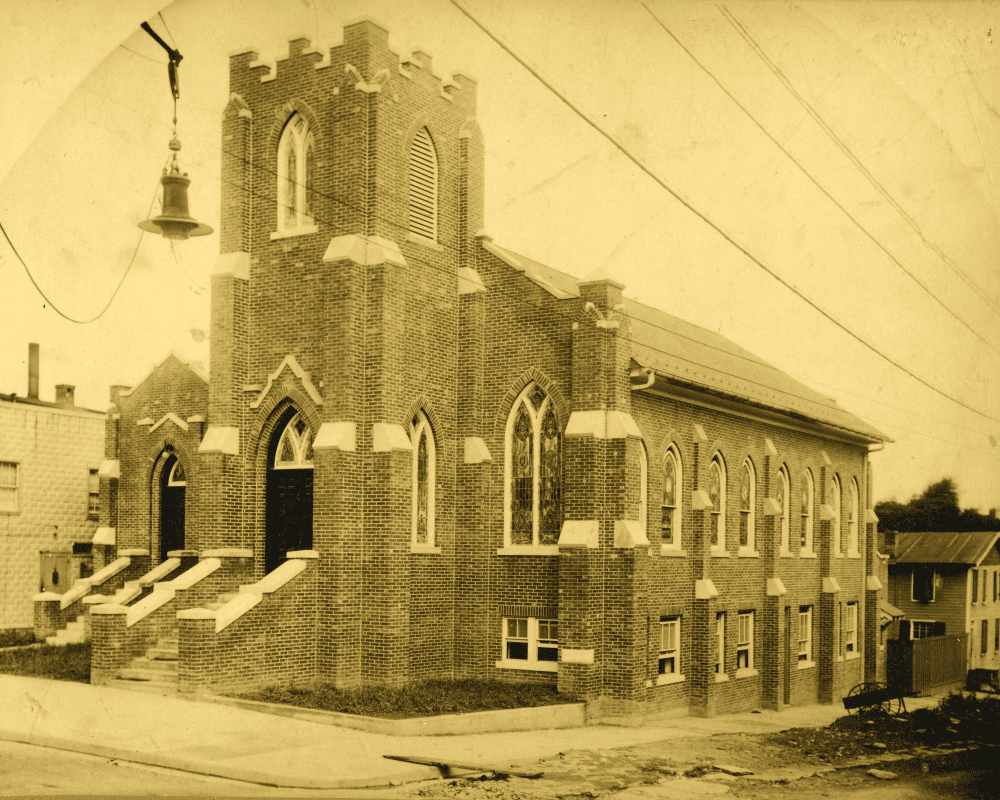
In 1818, William Hammond deeded part of lot 10 adjacent to the All Saints Church graveyard to a white Methodist congregation. A sanctuary was built that became known as Old Hill Church. Black families were allowed to worship there. In 1864, Black Methodists acquired Old Hill Church. In 1870, they incorporated as Asbury Methodist Church. The present church was built in 1921 at the corner of West All Saints Street and Court Street (formerly Brewers Alley).
Early Industries on All Saints Street
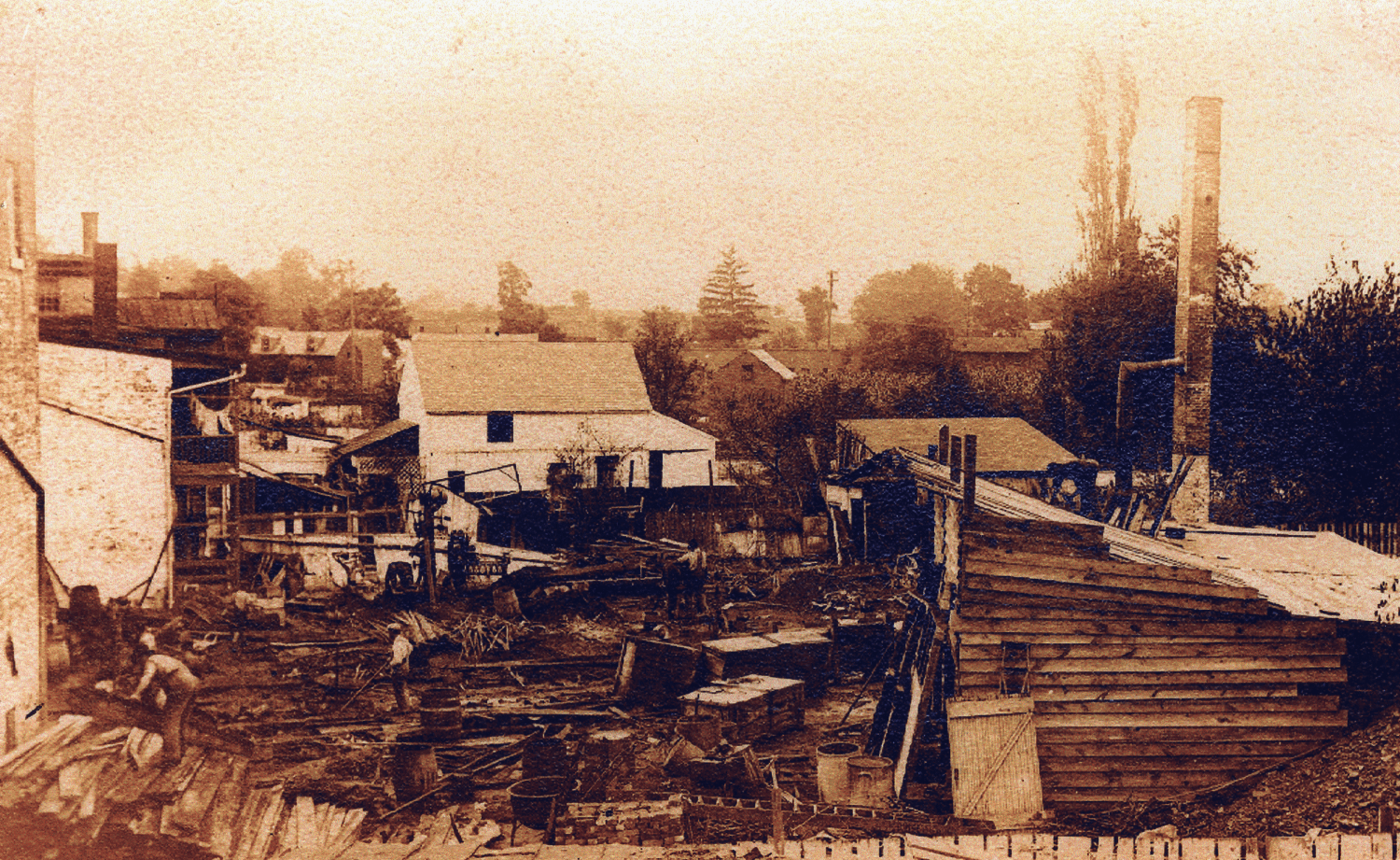
Tanneries were a major industry in Frederick in the 18th and 19th centuries. Several tanneries were located on the north side of Carroll Creek adjacent to All Saints Street. The Brown and McKinney Harness Tannery operated across the creek from the All Saints Church graveyard. A bark shed for the tannery was located on East All Saints Street, next to the lot once owned by former enslaved woman Elizabeth Hall. The Bierly tannery was located further east on the creek. By the early 20th century, the market for leather was diminished as the need for it in saddles and carriages died out, and new materials replaced it.

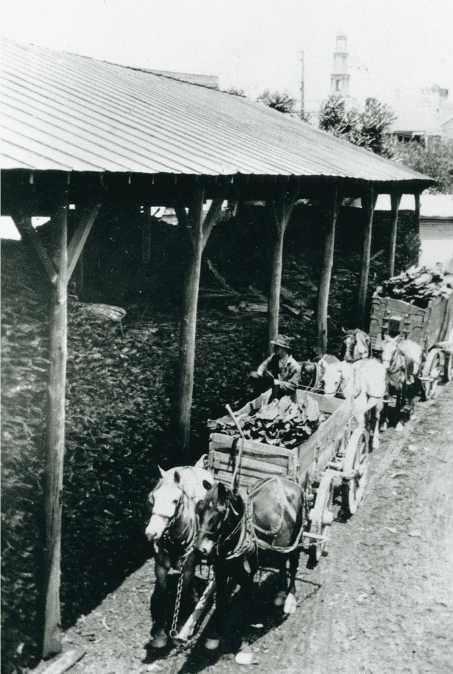
A tannery needed only small capital investment and little specialized equipment. What was needed were animal hides, a supply of water and lime, and oak tree bark. All those materials were readily available in Frederick. Once animal hides were soaked in a lime-water solution, they were scraped. Then hides were bathed in a solution of “tannins,” a chemical compound derived from the bark of oak trees, which transformed the hide into leather that was used in shoes, horse collars and machinery belts.
First Train Arrives in Frederick
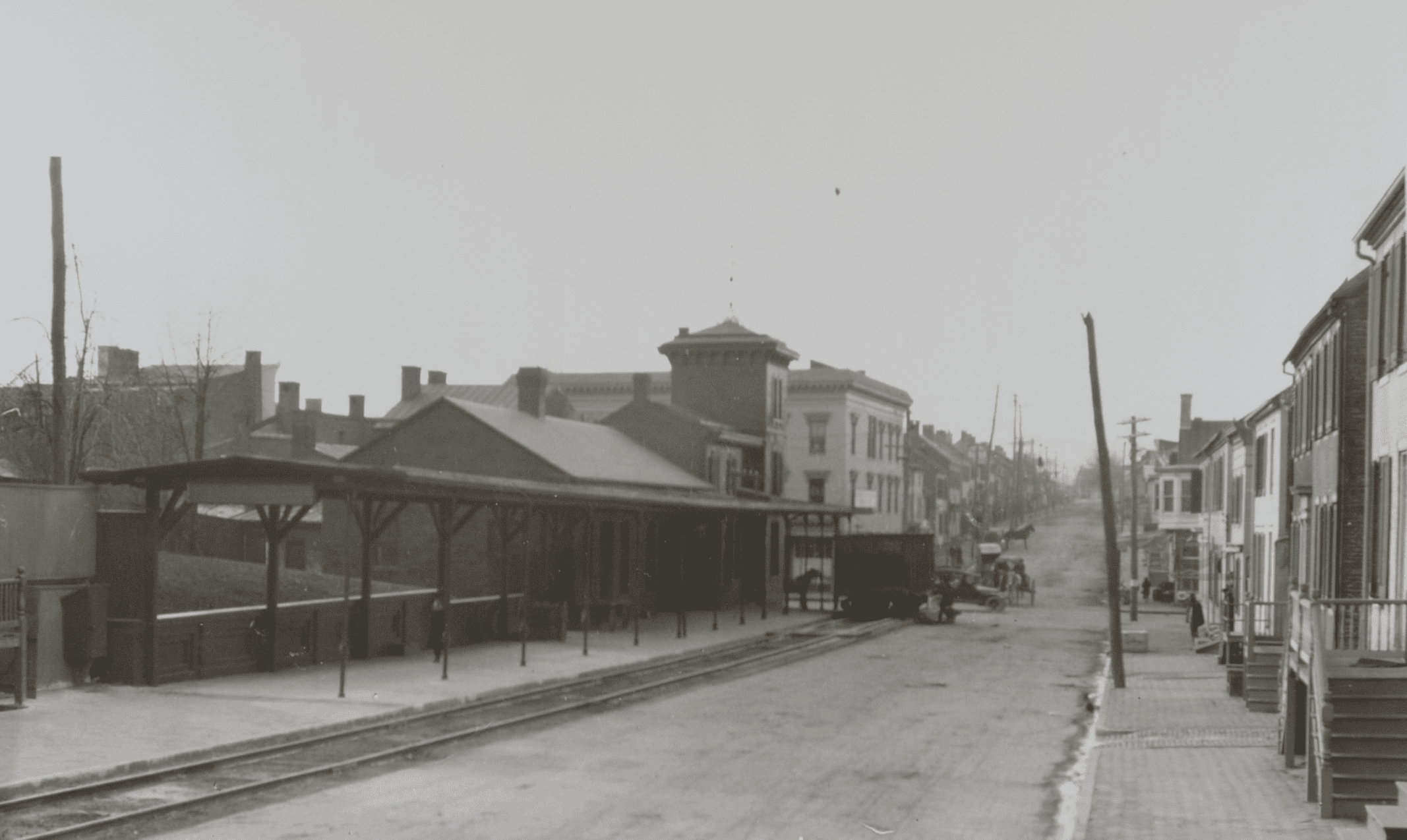
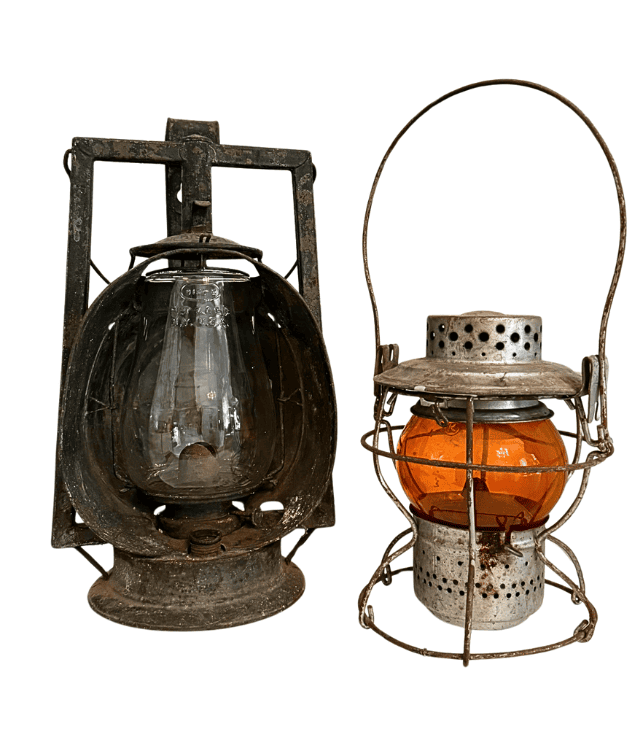
On December 1, 1831, the Baltimore and Ohio Railroad came to Frederick. The passenger stop was first located at the corner of East All Saints Street and Carroll Street. The first train coming into Frederick was pulled by horses. The early passenger cars were similar to enlarged stage coaches with rimmed wheels to keep them on the tracks. The horses ran along a dirt path between rails and relays of horses were used on longer runs.
By 1833, the train tracks were extended to come up East All Saints and end at South Market Street. Passengers waited at the U.S. Hotel across the street. A train station, built in the popular Italianate style, was constructed in 1854 and still stands today. The last passenger train arrived at the station in 1949.


All Saints Street in the Civil War
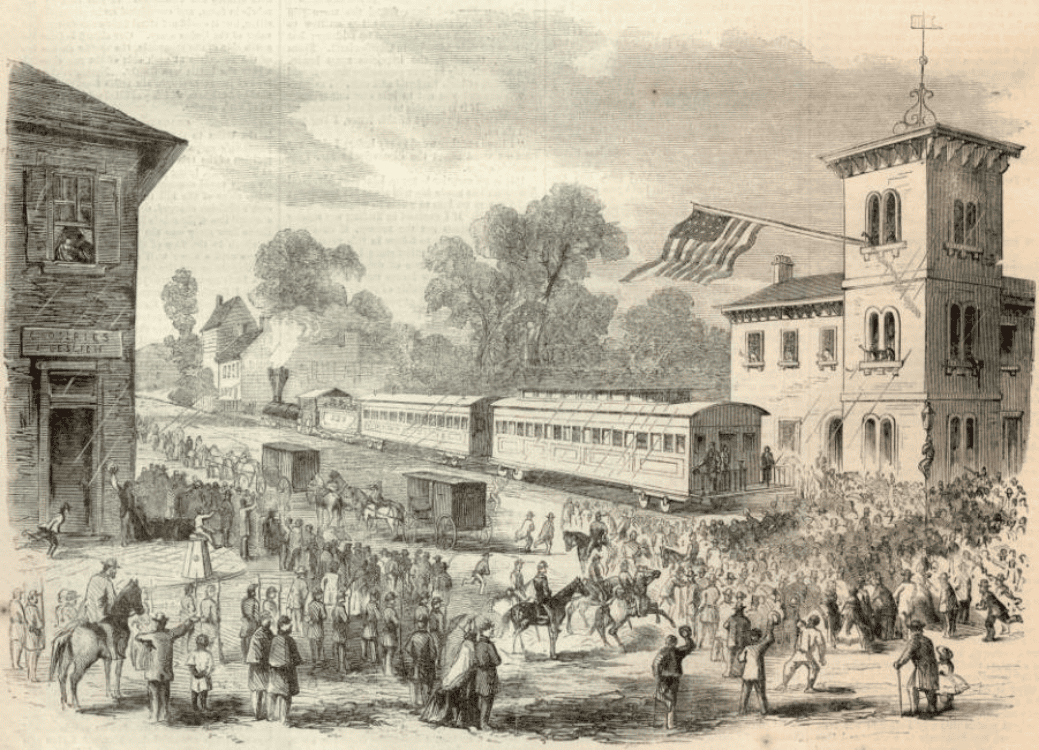
On October 1, 1862, Abraham Lincoln arrived at the B&O passenger station at the corner of East All Saints and Market Streets. He traveled by wagon to Antietam to view the battlefield and talk to his generals. Upon his return to Frederick, he visited a wounded officer on Record Street and spoke to the large crowd that had gathered outside the B&O station.
Across the street from the train station, the United States Hotel with its 50 rooms was used as a hospital following the fighting at South Mountain and Antietam in September 1862. Old Hill Church also served as a hospital.
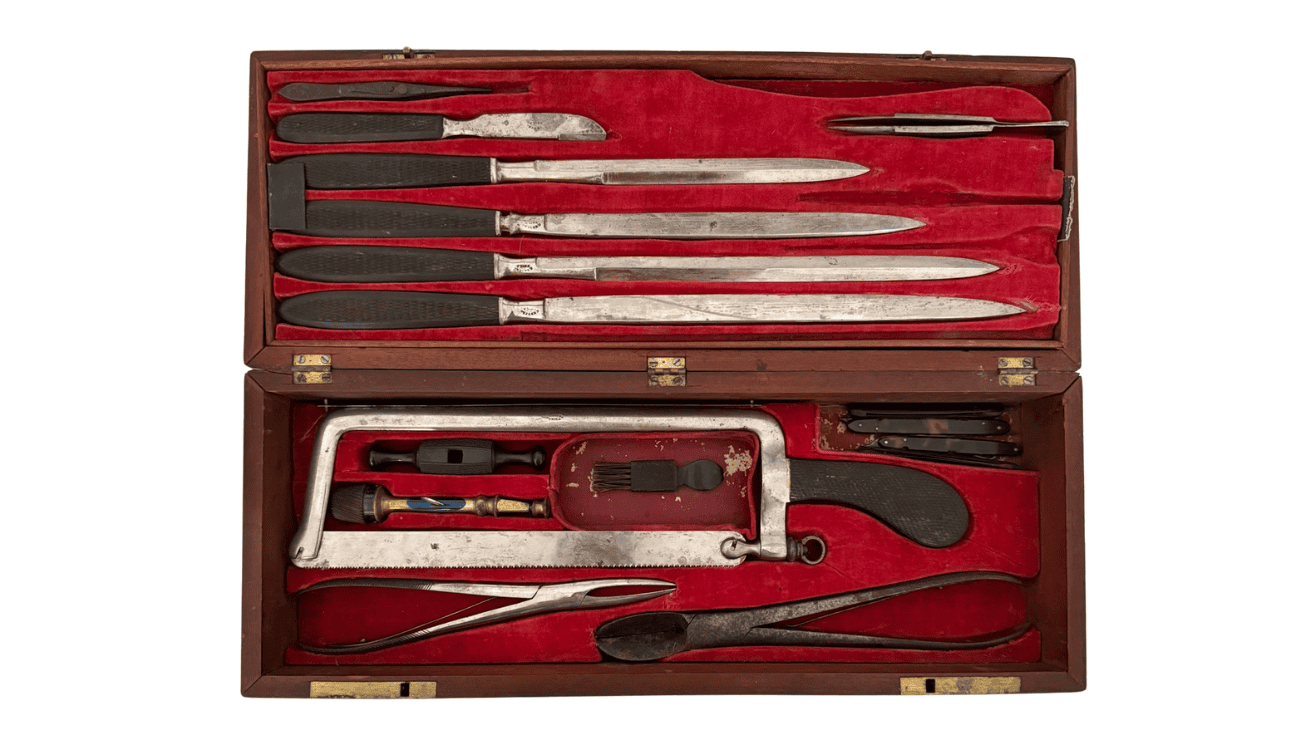
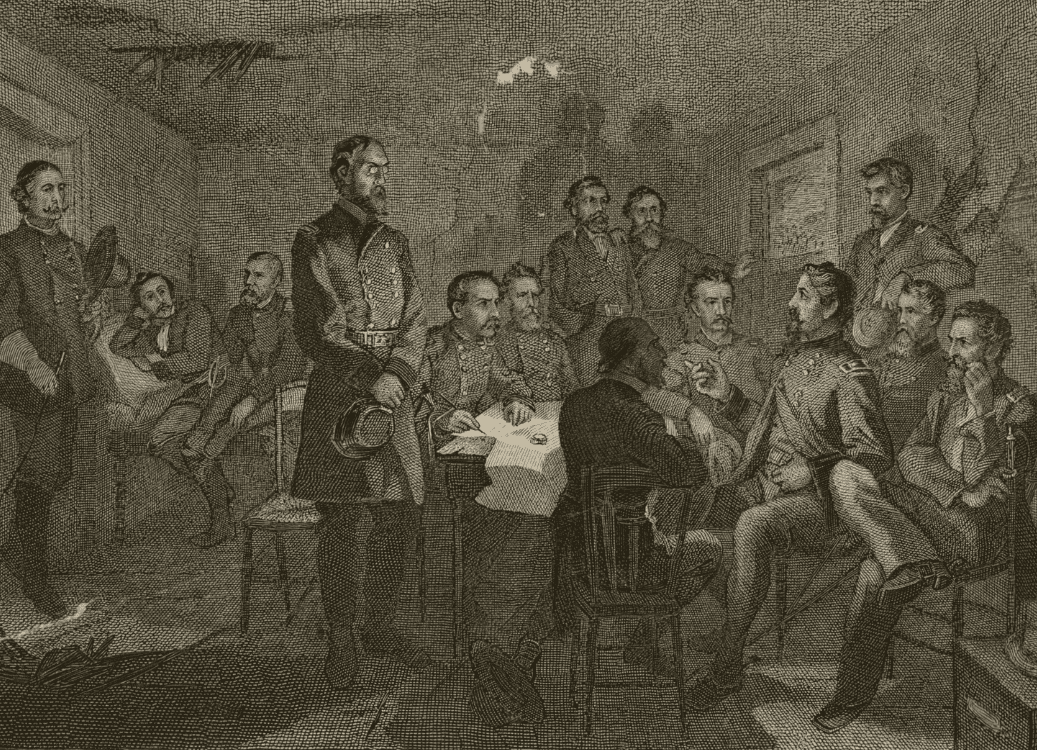
Before and after the battle of Gettysburg in July 1863, the U.S. Hotel served as the Union Army command headquarters. General Joseph Hooker, who was in command of the Army of the Potomac, stayed there in late June before the battle. Three days before the battle, General George Meade replaced Hooker as commander. After the battle, Meade stayed at the hotel because of its location near the train station. Meade worked on a strategy to confront Lee again and requested more troops and supplies. As he waited at the hotel, the Confederate army crossed the Potomac River back into Virginia.
Louis McMurray and the First Cannery in Frederick County
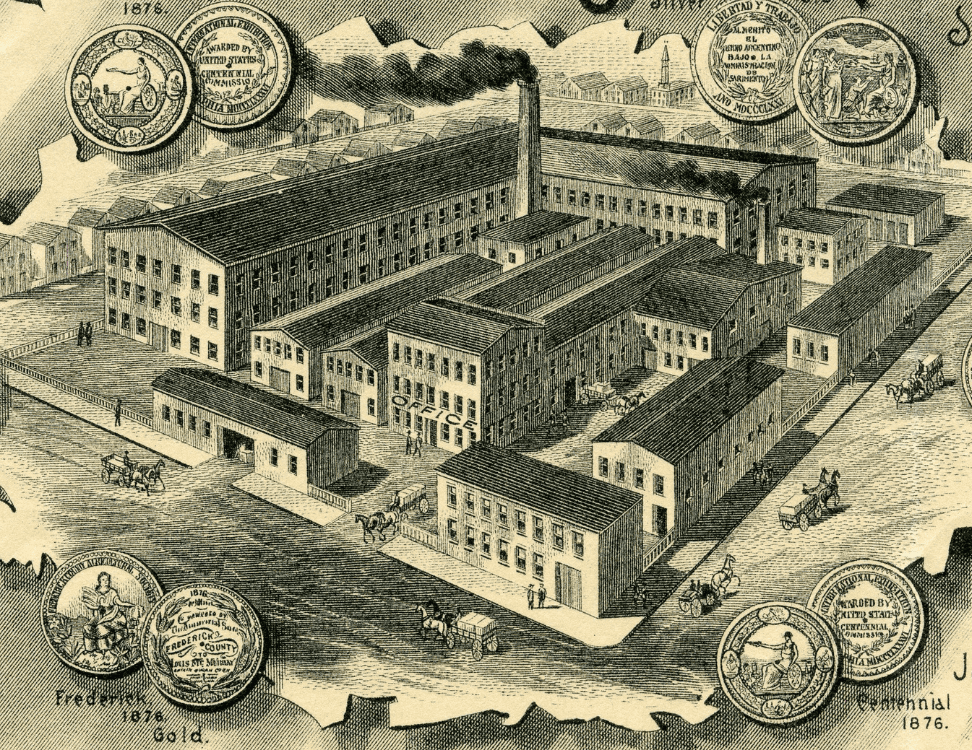
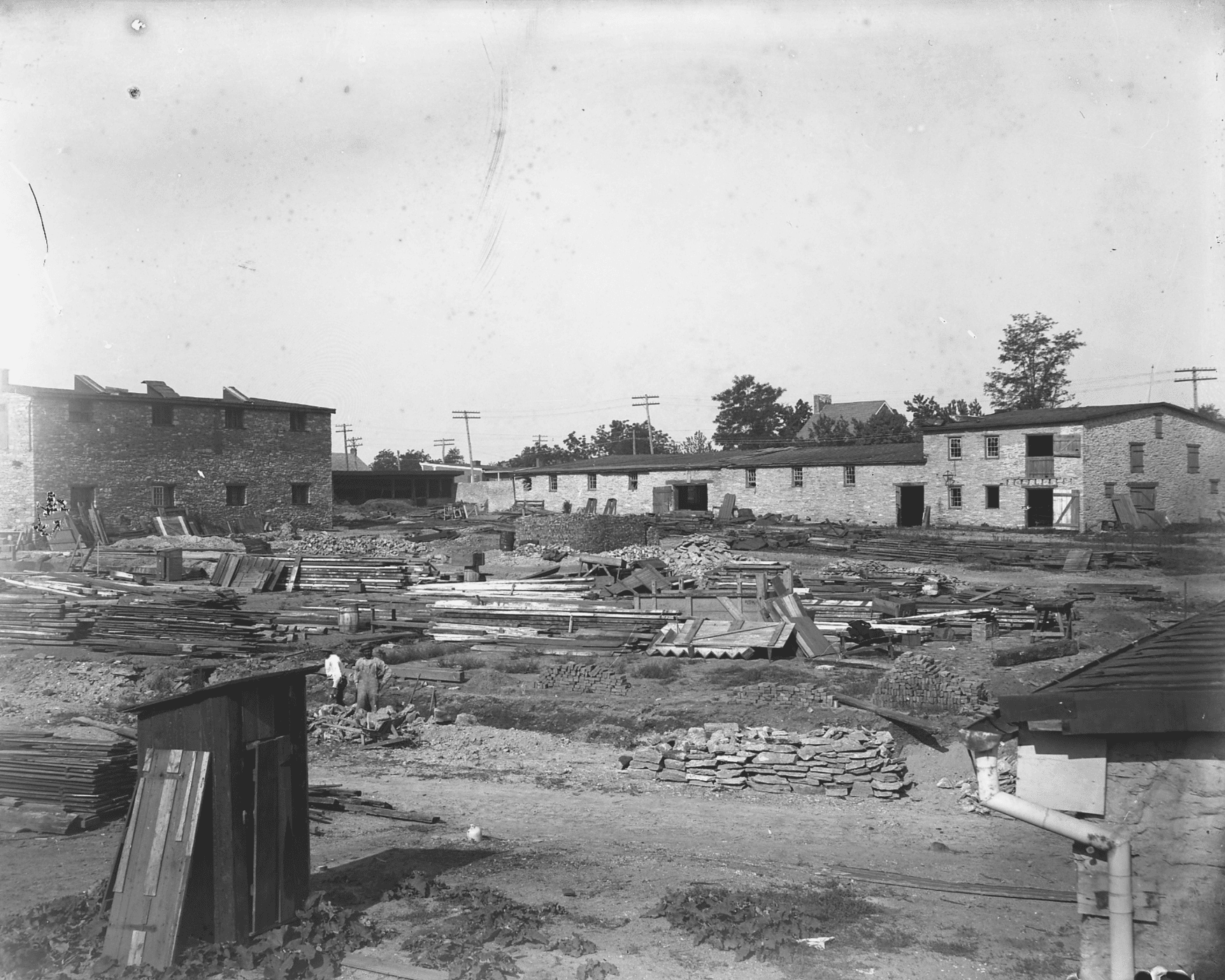
In 1868, Baltimore restaurant owner Louis McMurray founded the McMurray Packing Company. He purchased 3 acres on West All Saints Street extending to West South Street and ending at Bentz Street and began to process and can fruits and vegetables. The cannery had environmental problems. In 1886, the Frederick County health department charged the plant with improperly disposing corn husks and manure and discharging wastewater into local water supplies. McMurray was a hands-on owner and after his death in 1888, the cannery went into decline and by 1904 the plant was torn down.
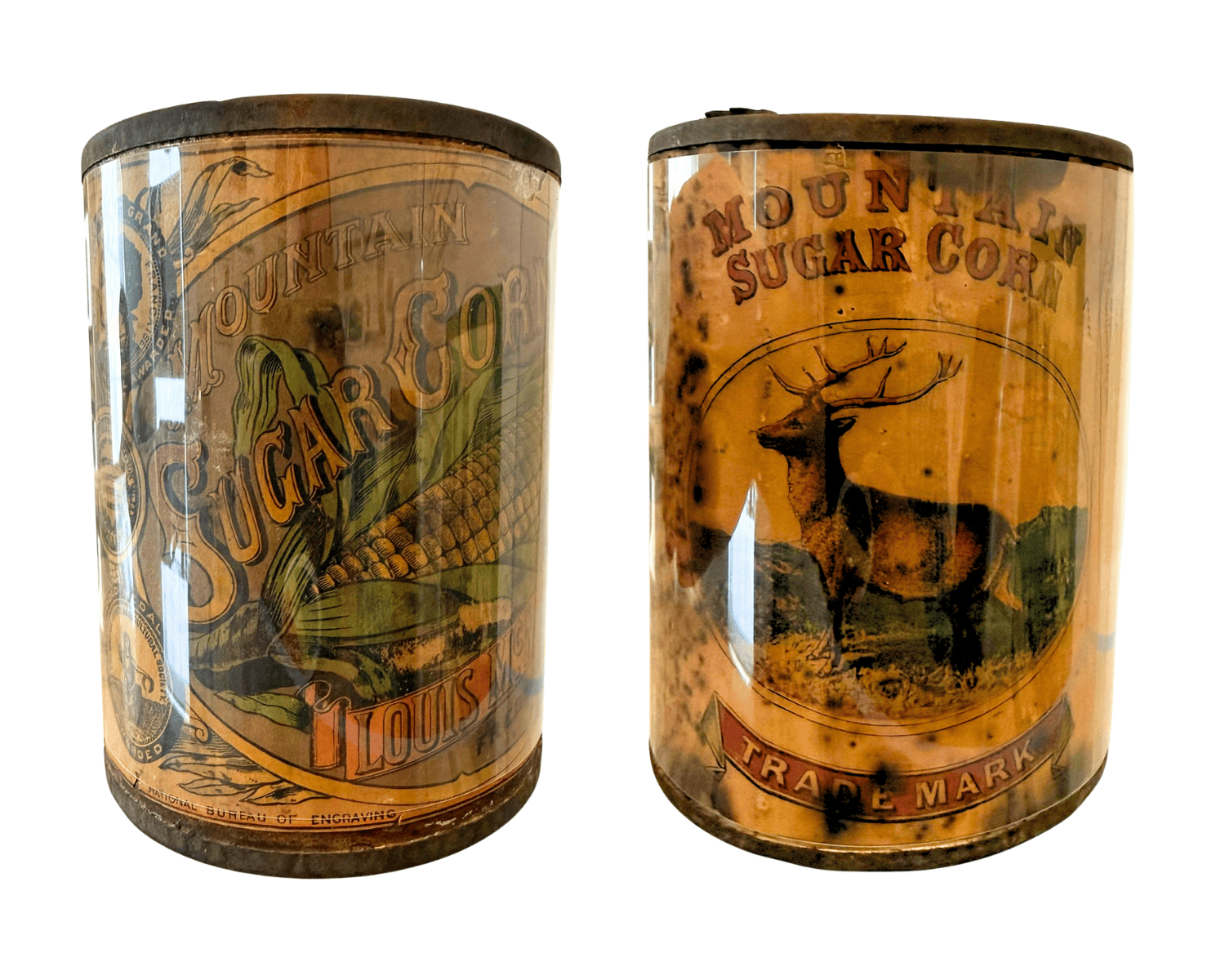
In 1870, McMurray patented a machine that sealed cans, replacing the need for skilled tinsmiths with unskilled labor. By 1886, the company was producing 3,000,000 cans of “Mountain Sugar Corn” annually and employed 1000 seasonal workers.
Brewing on All Saints Street
The earliest settlers on All Saints lived and worked in their homes. As Frederick grew, so did the size of their businesses and the complexity of their work. Work left the home, but businesses that provided jobs came to All Saints Street.
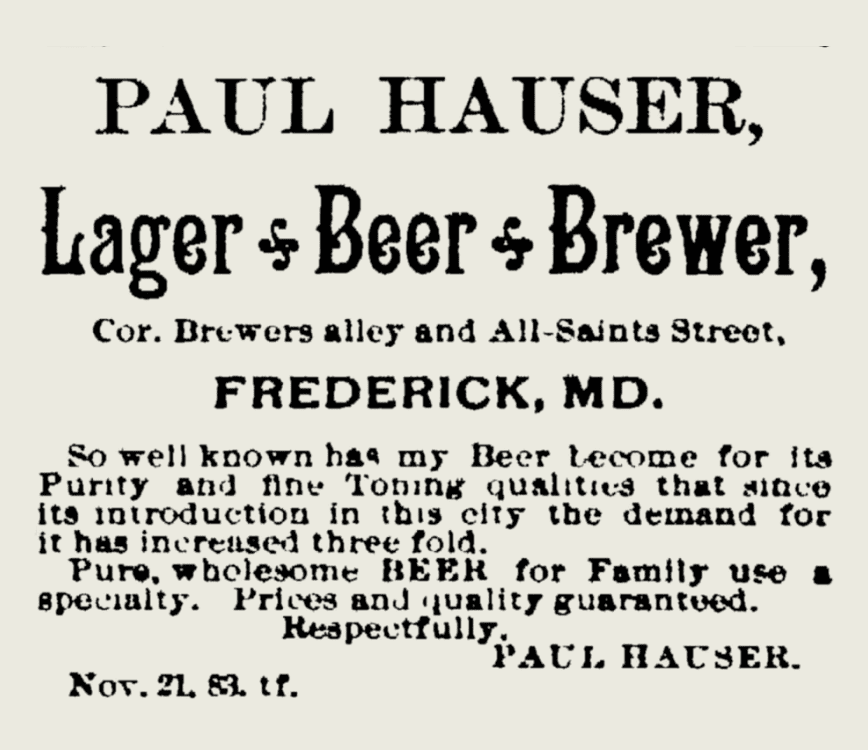
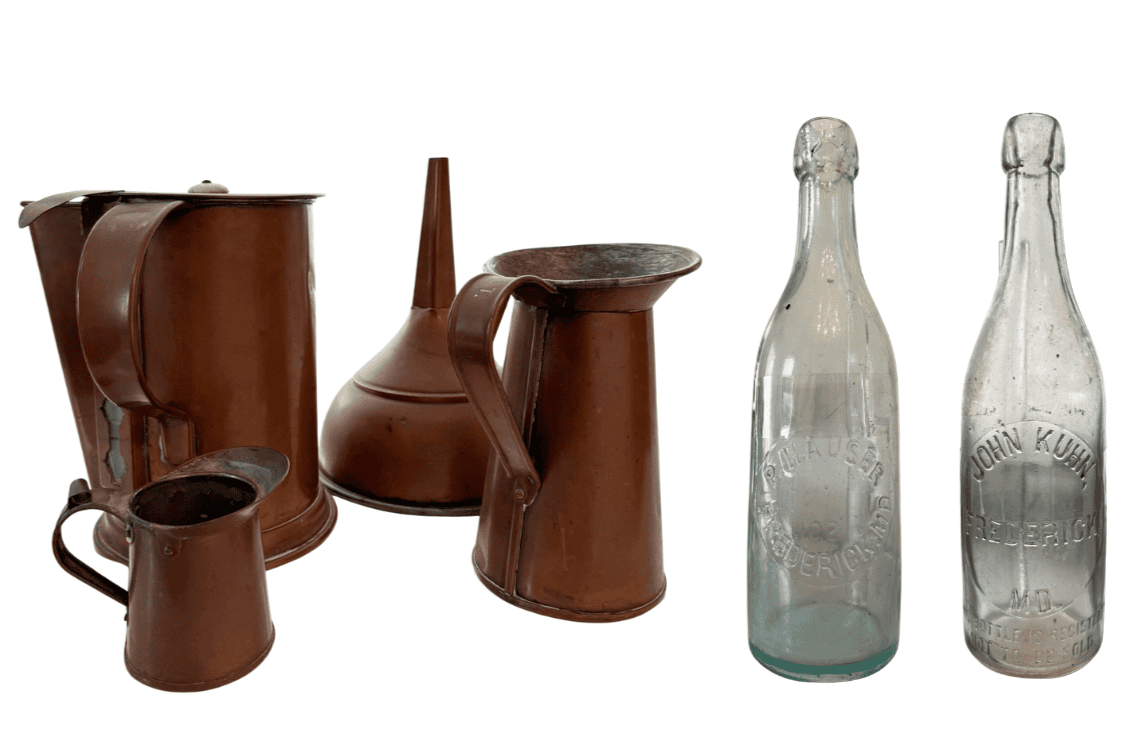
Before Asbury Methodist built a church at the corner of West All Saints and Ice Street, breweries occupied the site during the 19th century. The block from West All Saints Street to West Patrick Street was called “Brewers Alley.” All Saints Street resident John Gomber ran a brewery there in the early 1800’s. Diarist Jacob Engelbrecht described a “small brewery” on the site in 1839. Peter Bauer modernized the facility and ran it for a number of years, even cutting his own barley that was used in brewing beer. Paul Hauser bought the brewery in 1878 producing lager beer for nine years. John Kuhn bought the building in 1891 and brewed beer there until fire consumed the building in 1901, ending the production of beer on All Saints Street.

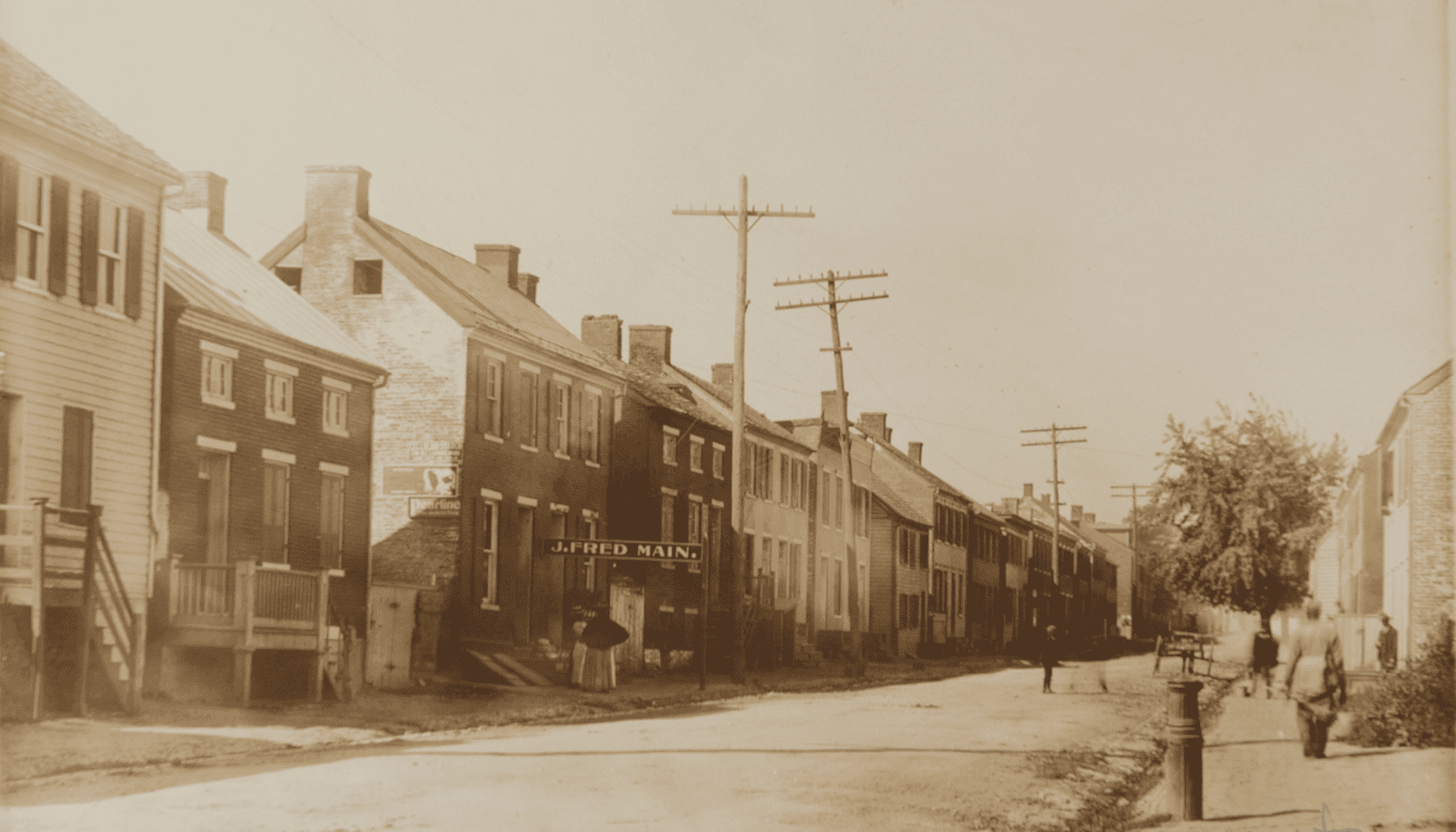
Free African Americans formed communities on All Saints Street and throughout other areas of downtown Frederick in the 19th century. The rise of Jim Crow segregation in the wake of Reconstruction after the American Civil War led to the increased division of white and Black residents in Frederick. By the turn of the 20th century, All Saints Street evolved into a separate, but equally vibrant Main Street for Frederick’s Black community.
Healthcare, education, voting, jobs, and recreation were denied to African Americans in the same way that they were provided to the white community. The people of All Saints Street, their schools, churches, fraternal organizations, and businesses tell a story of struggle, courage and triumph in the face of segregation and racism.
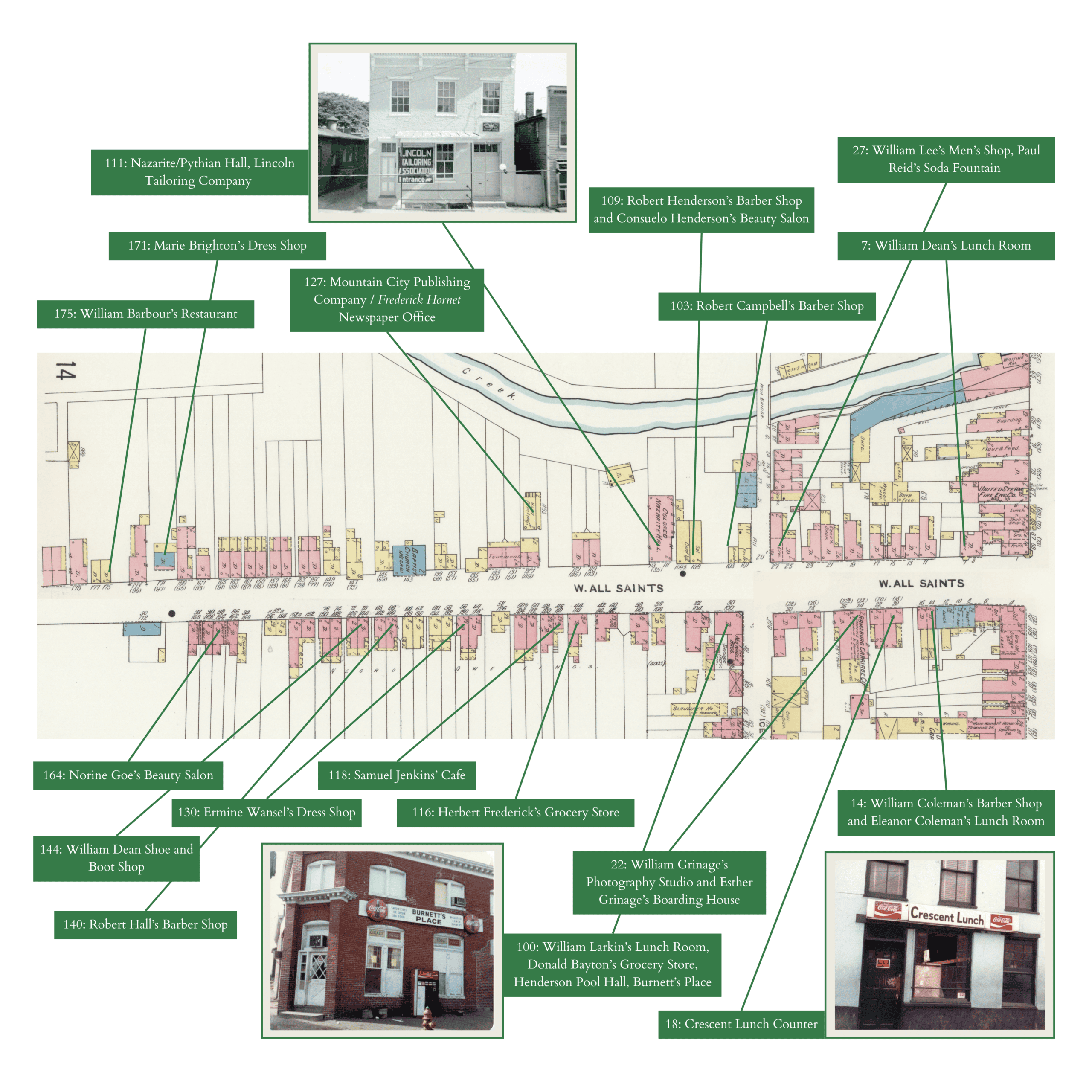
Businesses on All Saints Street
During the 20th century, Jim Crow laws and practices allowed downtown restaurants, clothing stores, taverns, and theaters to refuse or limit service to African Americans. Up and down All Saints Street, businesses were established to meet the needs of the community.

Fighting for Equal Rights
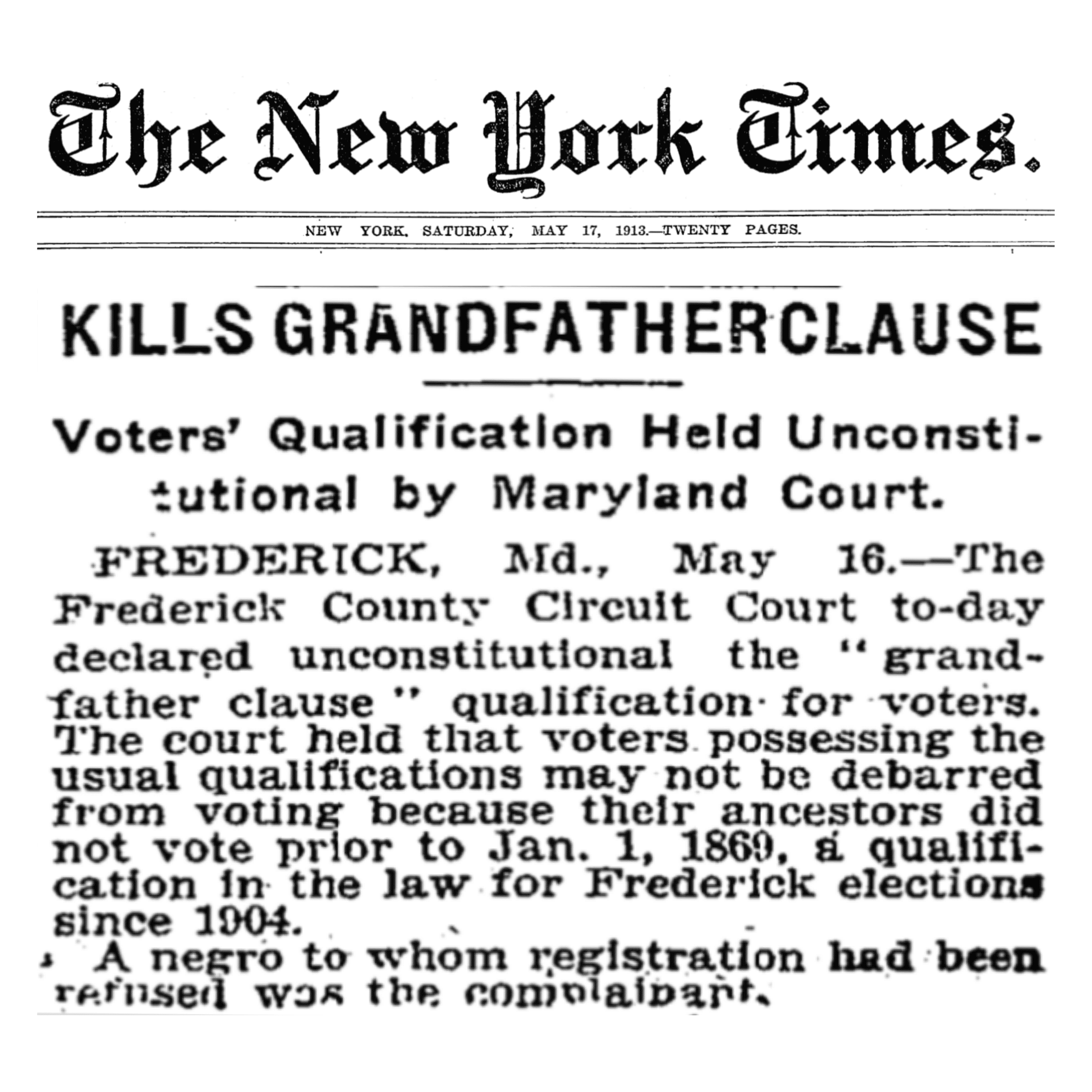
In 1904, Frederick enacted a requirement that only males could vote in elections whose ancestors had voted before 1869. That was the year that African Americans were guaranteed the right to vote by the 15th Amendment to the Constitution. Edward Mitchell Johnson, editor of The Frederick Hornet, which was located on West All Saints Street, called for a boycott of Emancipation Day to protest the law. Knowing that African Americans traveled from across the state to attend Frederick County’s Emancipation Day event, the boycott impacted the profits of the railroads and other businesses that relied on this tourism.
Nine years passed before Johnson raised money to formally challenge the law in court. In a hearing on May 16, 1913, the “grandfather clause” was overturned because it violated the 15th Amendment. The case received nation-wide attention in striking down a Jim Crow law which had disqualified 437 voters in the county. Johnson’s victory became the test case that ultimately struck down similar laws preventing African American men to vote across Maryland.
Providing Healthcare Access
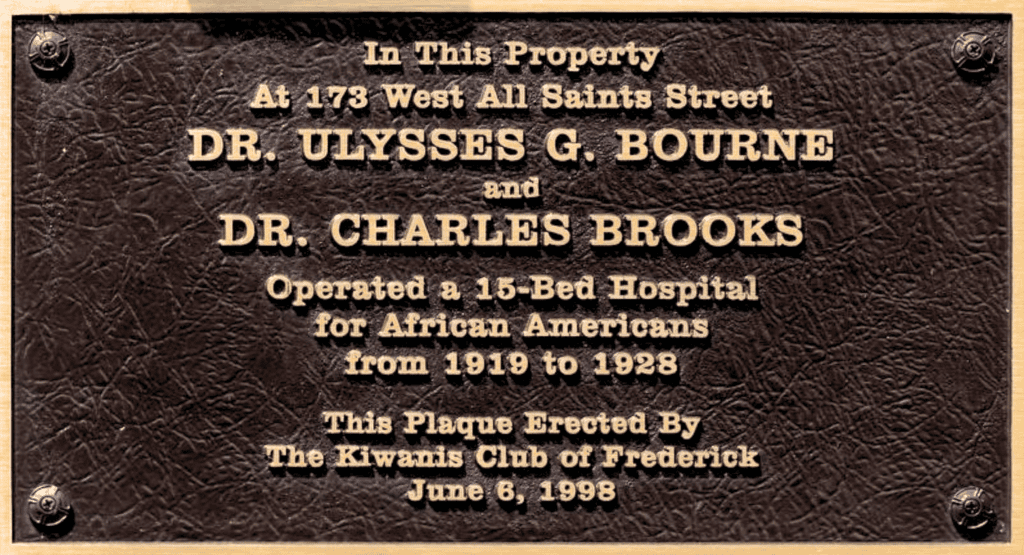
When the Frederick City Hospital (now Frederick Health) opened in 1902, it did not admit African American patients. Recognizing the need for a hospital that would serve their community, Dr. Ulysses Bourne and Dr. Charles Brooks, both residents on All Saints Street, led efforts to create the Union Hospital Association. By 1907, at a cost of $3000, a hospital with an operating room, 15 beds, and six wards was opened at 173 West All Saints Street. After that hospital closed, a second hospital opened in 1919 and remained in operation until 1928, when an addition was made to Frederick Hospital to provide a segregated area for Black patients.
